
Privacy Fence Installation Near Me in Byron, IL: How to Compare Materials
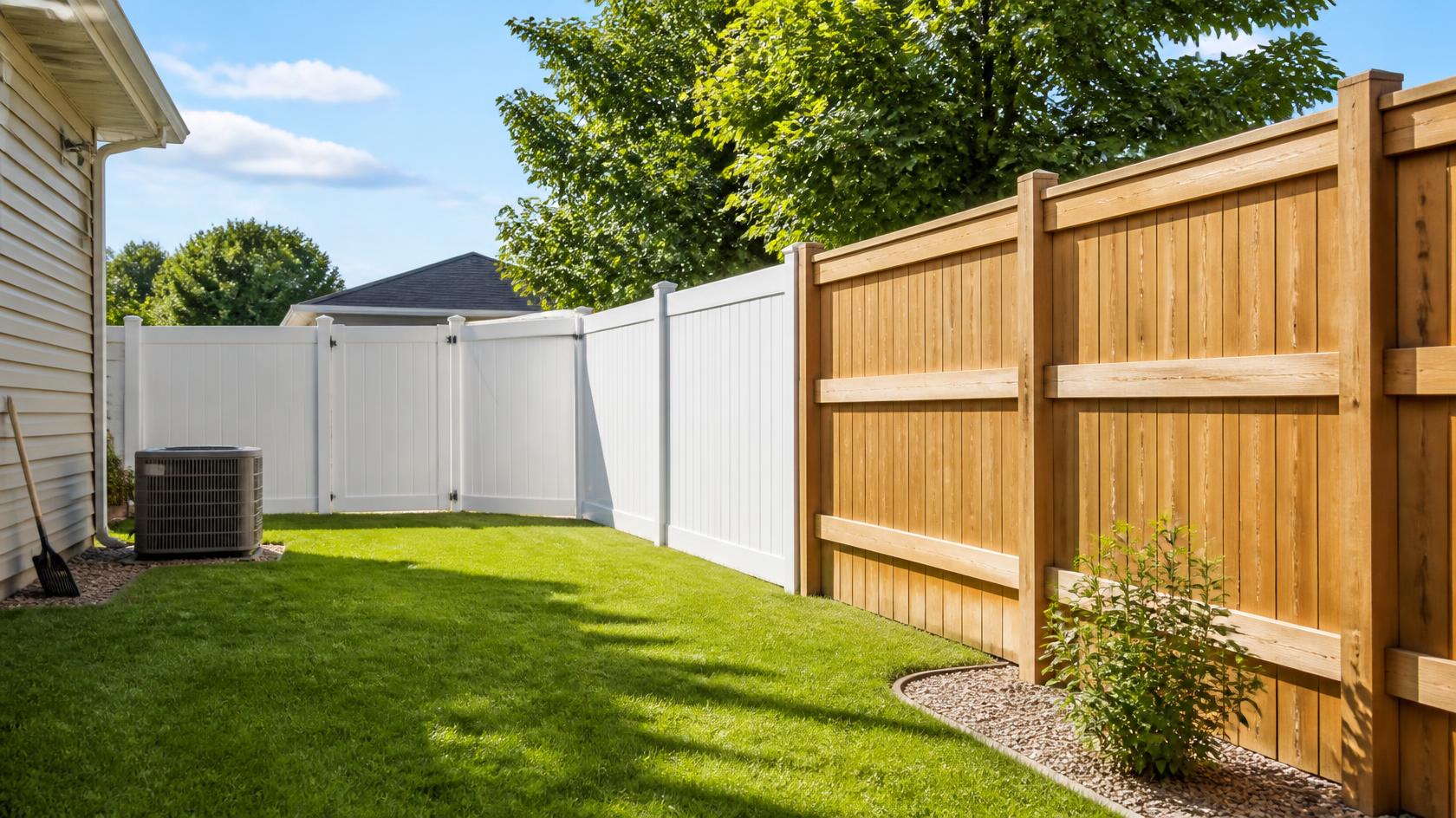
When comparing privacy fence installation options in Byron, homeowners should look beyond appearance alone. Wood, vinyl, chain link with privacy features, and mixed-material layouts differ in maintenance, airflow, pet suitability, weather performance, repair needs, and long-term appearance. The best material depends on how much privacy the yard needs and how much upkeep the homeowner wants to manage.
Start With the Reason You Need Privacy
Before comparing materials, identify exactly what the fence needs to screen.
Privacy may be needed around:
Patios
Decks
Neighboring property lines
Side yards
Roads
Outdoor seating areas
Pet spaces
Utility areas
Some homes need full backyard privacy, while others only need screening along one side.
Knowing where privacy matters can prevent choosing more fencing than the property actually needs.
Compare More Than the Initial Appearance
Two privacy fences may look similar on installation day but require very different maintenance over time.
When comparing materials, consider:
Privacy level
Maintenance
Durability
Wind exposure
Pet needs
Repairability
Landscaping
Gate design
Yard slope
Drainage
Long-term appearance
The best privacy fence is usually the one that fits both the property and the homeowner’s expectations.
Wood Privacy Fencing
Wood is a traditional choice for homeowners who want privacy with a natural appearance.
It works well with:
Mature trees
Decks
Gardens
Patios
Traditional homes
Natural landscaping
Wood can also be customized through board patterns, stains, trim, gates, and decorative features.
Solid Vertical Wood
Solid vertical boards create straightforward privacy.
This style can help block views from:
Neighboring yards
Sidewalks
Roads
Nearby outdoor areas
It offers a familiar residential look and can be stained to coordinate with the home.
Board-on-Board Wood
Board-on-board fencing uses overlapping boards.
Because wood naturally expands and contracts with changing moisture and temperature, small gaps can develop in standard vertical fencing.
The overlapping design helps reduce those sightlines.
This can be useful along:
Shared property lines
Patios
Pet areas
Road-facing sections
It also gives the fence a more substantial appearance.
Shadowbox Wood
Shadowbox fencing alternates boards on opposite sides of the rails.
This allows more airflow while still providing partial privacy.
It may work well for homeowners who want some screening without creating a completely solid wall.
The main tradeoff is that shadowbox fencing does not provide full privacy from every viewing angle.
Wood Maintenance Considerations
Wood generally requires more routine care than vinyl.
Homeowners should periodically check for:
Rot
Cracks
Loose boards
Splinters
Worn stain
Weak rails
Gate problems
Protective staining or sealing may also be needed depending on the wood and exposure.
For homeowners who enjoy the appearance of natural wood and are comfortable with maintenance, this may be a good tradeoff.
Vinyl Privacy Fencing
Vinyl can be a strong option for homeowners who want consistent screening with less routine surface maintenance.
It does not require regular:
Painting
Staining
Sealing
Full-privacy vinyl panels can create a clean, uniform boundary around a backyard or outdoor living area.
Full-Privacy Vinyl
Solid vinyl panels provide strong visual screening.
They work well around:
Backyards
Patios
Pet spaces
Side yards
Shared boundaries
Vinyl also has a smooth surface and does not develop splinters.
Routine care generally involves washing and checking posts, rails, gates, and hardware.
Semi-Private Vinyl
Semi-private vinyl includes narrow openings that allow more airflow and light.
This style may work well where homeowners want separation without fully closing off the yard.
It can be useful around:
Garden areas
Larger yards
Side yards
Wind-exposed sections
For smaller dogs, opening sizes should be reviewed carefully.
Compare Wood and Vinyl Maintenance
Maintenance is one of the biggest differences between wood and vinyl.
Wood
May require:
Cleaning
Staining
Sealing
Board replacement
Periodic refinishing
Vinyl
Usually requires:
Cleaning
Gate adjustments
Post inspections
Hardware checks
Replacement of damaged components when necessary
If lower routine maintenance is a priority, vinyl may be more appealing.
If natural appearance and customization matter more, wood may be the better fit.
Compare Privacy Consistency
Privacy can change over time depending on the material.
Wood
Standard boards may develop small gaps as the material naturally expands and contracts.
Board-on-board construction can help reduce those sightlines.
Vinyl
Full-privacy panels provide more consistent solid coverage because they are manufactured as connected sections rather than individual natural boards.
For homeowners who want a very uniform visual barrier, this difference may matter.
Consider Wind Exposure
Solid privacy fencing catches more wind than open fencing.
This is important for both wood and vinyl.
Homeowners with exposed yards should pay attention to:
Post stability
Panel connections
Gate posts
Fence height
Semi-private styles may allow more airflow where complete privacy is not necessary.
A contractor should consider the property rather than treating every yard the same.
Compare Materials for Pets
Pet needs can influence the best privacy material.
Wood
Solid wood can block views of neighboring dogs, pedestrians, wildlife, and vehicles.
Vinyl
Full-privacy vinyl also creates a strong visual barrier with a smooth surface.
Chain Link
Chain link provides containment but little privacy unless slats or screening are added.
If a dog becomes reactive when it sees outside activity, solid wood or vinyl may work better than an open style.
Chain Link With Privacy Features
Chain link is not normally considered a full privacy fence, but privacy slats or screening can be added.
This can work well when homeowners want:
Practical containment
Longer boundary fencing
Selective screening
Pet areas
However, privacy additions increase wind pressure on the fence framework.
For homeowners who want complete, consistent screening near the home, solid wood or vinyl may provide a cleaner result.
Mixed-Material Privacy Fencing
A property does not need the same material everywhere.
A mixed layout may include:
Vinyl privacy near a patio
Wood along a neighboring property line
Chain link around a dog area
Aluminum near landscaping
This can help homeowners balance:
Privacy
Maintenance
Appearance
Budget
Open views
Mixed materials can be especially practical on larger properties.
Compare Gate Options
The material choice also affects gate planning.
Wood Gates
Can be customized easily but may become heavy, particularly when wide.
They need:
Strong hinges
Proper bracing
Stable posts
Vinyl Gates
Provide a clean appearance and may require internal reinforcement for wider openings.
Chain Link Gates
Can be practical for equipment access and larger openings.
Whatever material you choose, gate width should be decided before installation.
Think About Equipment Access
Privacy is important, but so is getting into the yard.
Measure anything that may need to pass through the gate, including:
Riding mowers
Trailers
Landscaping equipment
Utility vehicles
Large outdoor furniture
A fence that looks good but makes yard access difficult can become frustrating quickly.
Compare How Materials Work on Slopes
Byron properties may have yards with changing elevation.
Wood and vinyl can both work on sloped terrain, but installation methods differ.
Depending on the system, fencing may be:
Stepped
Installed to follow the grade more closely
Wood often offers more flexibility with individual boards.
Vinyl panel systems may require specific installation methods.
Pet owners should pay special attention to ground gaps on sloped sections.
Drainage Matters With Every Material
A low-maintenance fence material does not eliminate drainage concerns.
Heavy rain and snowmelt can:
Erode soil
Expose footings
Create ground gaps
Affect gate alignment
Contribute to post movement
Before installation, identify:
Low spots
Downspout discharge
Standing water
Runoff paths
Erosion
The fence should work with the natural movement of water across the property.
Compare Long-Term Appearance
Think about how you want the fence to look several years from now.
Wood
Develops natural weathering and may change color without regular refinishing.
Vinyl
Maintains a more consistent manufactured appearance with routine cleaning.
Neither is automatically better.
The choice depends on whether the homeowner prefers natural aging or a more uniform look.
Consider Repairs Before Choosing
Repairability is another useful comparison point.
Wood
Individual boards, rails, and hardware can often be repaired or replaced separately.
Vinyl
Damaged panels, rails, or manufactured components may need matching replacement parts.
Ask how repairs are typically handled for the specific fence system you are considering.
Compare Maintenance With Your Lifestyle
A fence should fit the amount of maintenance you realistically want to handle.
Wood may be a good fit if you:
Like natural materials
Do not mind periodic refinishing
Want design flexibility
Prefer individual-board repairs
Vinyl may be a good fit if you:
Want less routine surface maintenance
Prefer consistent privacy
Like clean lines
Do not want regular staining
Choosing based on lifestyle can be more useful than choosing based only on installation-day appearance.
Ask What Is Included in the Estimate
When comparing privacy fence installation near you, make sure each estimate covers the same scope.
Ask whether it includes:
Fence material
Posts
Rails
Panels or boards
Gates
Hardware
Installation labor
Existing fence removal
Cleanup
Disposal
Site preparation
A lower quote may not be directly comparable if important parts of the project are excluded.
Ask About Existing Fence Removal
If the project replaces an older fence, find out whether removal is included.
Removal may involve:
Boards or panels
Posts
Gates
Concrete
Hardware
Do not assume hauling and disposal are automatically included.
Understanding the full scope makes comparing contractors easier.
Ask How the Fence Will Handle Midwest Weather
Byron fencing needs to handle northern Illinois:
Wind
Rain
Snow
Ice
Storms
Freeze-thaw cycles
Ask how the proposed material and installation method address:
Post stability
Wind exposure
Drainage
Gate movement
Seasonal ground changes
The quality of the installation matters alongside the material itself.
Final Material Comparison
Choose Wood If You Want
Natural character
Custom design
Strong privacy
Flexible finishes
Easier individual-board repairs
Choose Vinyl If You Want
Lower routine maintenance
Consistent screening
Clean appearance
No regular staining or painting
Consider Chain Link With Privacy Features If You Want
Practical containment
Longer boundaries
Selective screening
Consider Mixed Materials If You Want
Privacy near the house
Open fencing elsewhere
Different solutions for pets, landscaping, and outdoor living
Request a Free Privacy Fence Estimate
Arrow Fence helps Byron homeowners compare privacy fence materials for backyards, pets, patios, side yards, and residential property boundaries.
Whether you are considering wood, vinyl, chain link with privacy features, mixed-material fencing, replacement, repairs, or new gates, Arrow Fence can help you review practical options for your property.
Contact Arrow Fence at arrowfencerockford.com to request a free estimate for your privacy fence installation.
