
Security Fence Installation for Businesses in WI
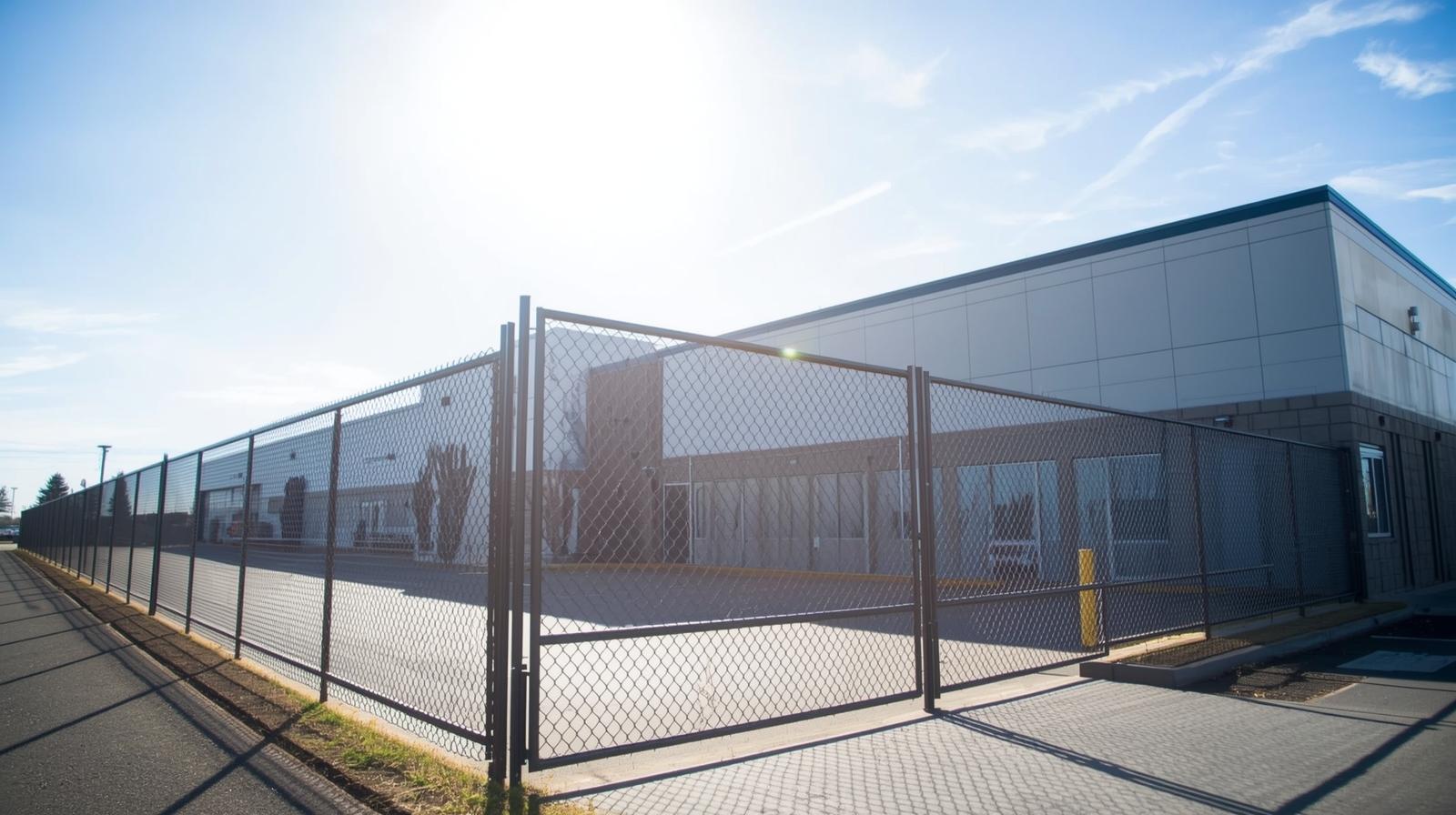
Is a new security fence just another line item on your budget? For many Wisconsin businesses, it’s one of the smartest investments they can make, actively protecting the bottom line from the rising costs of theft, vandalism, and liability claims.
Effective perimeter security does more than just mark a property line; it creates peace of mind. A professionally installed commercial security fence sends a clear, unambiguous message that your property is protected. This simple barrier is a powerful tool for preventing unauthorized access and deterring opportunists before they ever step foot on your grounds.
But what makes a fence right for your operation? Key decisions range from choosing the right materials to selecting a gate that won’t get stuck in a foot of snow. The most crucial factor for longevity in our state, however, is an installation that can withstand Wisconsin’s demanding freeze-thaw cycles.
Chain-Link vs. Ornamental Steel: Choosing the Right Strength and Look for Your Property
Once you’ve decided a security fence is necessary, the next big question is what kind it should be. For most Wisconsin businesses, the choice comes down to two excellent but very different options: classic chain-link and modern ornamental fencing.
The most familiar and cost-effective solution is galvanized chain-link. This is the workhorse of commercial security, ideal for securing large perimeters like industrial lots, backfields, or storage yards where the primary goal is a strong, no-frills barrier. The galvanization process coats the steel in a layer of zinc, giving it powerful, long-lasting protection against the rust and corrosion that our wet seasons can bring.
For businesses where public perception and curb appeal are a priority, ornamental steel or aluminum is the clear winner. While just as strong and secure, its clean lines and professional finish project an image of stability and success. This makes it a perfect fit for customer-facing properties like office parks, auto dealerships, and upscale apartment complexes, blending high security with sophisticated design.
Your choice sends a message. A chain-link fence says “Stay Out,” while an ornamental fence says “Secure and Professional.” Both are effective, but the right one depends on the image you want to present.
Beyond the Basics: What Actually Makes a Fence a Security Fence?
The difference between a simple boundary marker and a true security fence comes down to a few key features. The most obvious is height. While a standard 6-foot fence can deter casual trespassers, an 8-foot fence is significantly more difficult and intimidating to climb. This extra height is often the single most effective deterrent you can invest in.
Next, consider the strength of the material itself. For chain-link, this is measured by its "gauge"—a number indicating wire thickness. It’s counterintuitive, but the lower the gauge number, the thicker and stronger the wire is, making it much harder to cut through.
Lower Gauge Number = Thicker, Stronger Wire
9-Gauge: A strong, common choice for commercial security.
6-Gauge: Even thicker for high-security needs.
Finally, you can add anti-climb features like barbed wire to the top of your fence for a powerful visual and physical deterrent. A fence is only as strong as its access point, which brings us to a critical question for any Wisconsin business: which automated gate won't get stuck in the snow?
The Gate Problem: Which Automated Gate Won't Get Stuck in a Wisconsin Winter?
A gate is useless if it can’t open. A standard swing gate, which opens like a door, can be completely blocked by packed snow or a frozen drift. This forces staff to shovel the pathway every time access is needed, creating a constant operational headache and negating the benefits of an automated system.
To solve this, many turn to a slide gate, which rolls sideways on a ground track. While this saves space, it creates a new winter challenge. The ground track is a perfect channel for ice, slush, and gravel, which can jam the gate’s rollers and prevent it from opening or closing smoothly.
The cantilever gate is the superior choice for Wisconsin businesses. It is counter-balanced to slide open while suspended just above the ground—there is no track to get clogged. It glides effortlessly over snow and ice, ensuring your business remains accessible all winter. This kind of forward-thinking is critical, and it extends down to the fence posts themselves.
The "Wisconsin Factor": Why Your Fence Posts Must Beat Frost Heave
That same winter-proofing mindset applies directly to your fence posts. Throughout Wisconsin, the ground’s freeze-thaw cycle creates a powerful upward force called frost heave. Over just a few seasons, this immense pressure can push posts right out of the ground, leaving you with a wavy, unstable security line that is unprofessional and easy to breach.
To prevent this, installers must go deeper. Professional installers anchor each post in a concrete footing that extends below the local frost line—the maximum depth the ground freezes, which is typically four feet or more. This places the anchor in stable soil that isn't affected by surface freezing, ensuring your fence stays straight and strong for the long haul.
Any installer can put a post in a hole, but only a professional accounts for the punishing local climate. A suspiciously low bid often means corners were cut on footing depth, guaranteeing a costly failure down the road. Asking an installer about their process for beating frost heave is a critical check you must make before hiring.
Your Next Step: 5 Critical Questions to Ask a Wisconsin Fence Installer
Understanding the critical elements of a security fence—from deep footings to winter-proof gates and proper materials—separates a lasting investment from a future headache. With this knowledge, you can evaluate your options like an expert.
Use these five critical questions to vet any installer and ensure their work meets the high standards your business deserves:
How deep will you set the fence post footings to prevent frost heave? (Look for an answer of 48" or more.)
For a high-traffic gate, do you recommend a cantilever system? Why?
What material and gauge do you recommend for my specific security needs (e.g., preventing theft vs. just marking a boundary)?
Are you licensed and insured for commercial work in Wisconsin?
Can you provide references for similar commercial projects you've completed locally?
A security fence is more than a barrier; it's a strategic asset that protects your property, enhances your professional image, and provides peace of mind through every Wisconsin season. Armed with these insights, you can make a confident, long-term investment in your business’s security.
