
Storm Damage Fence Repair in Rockford: What To Do First
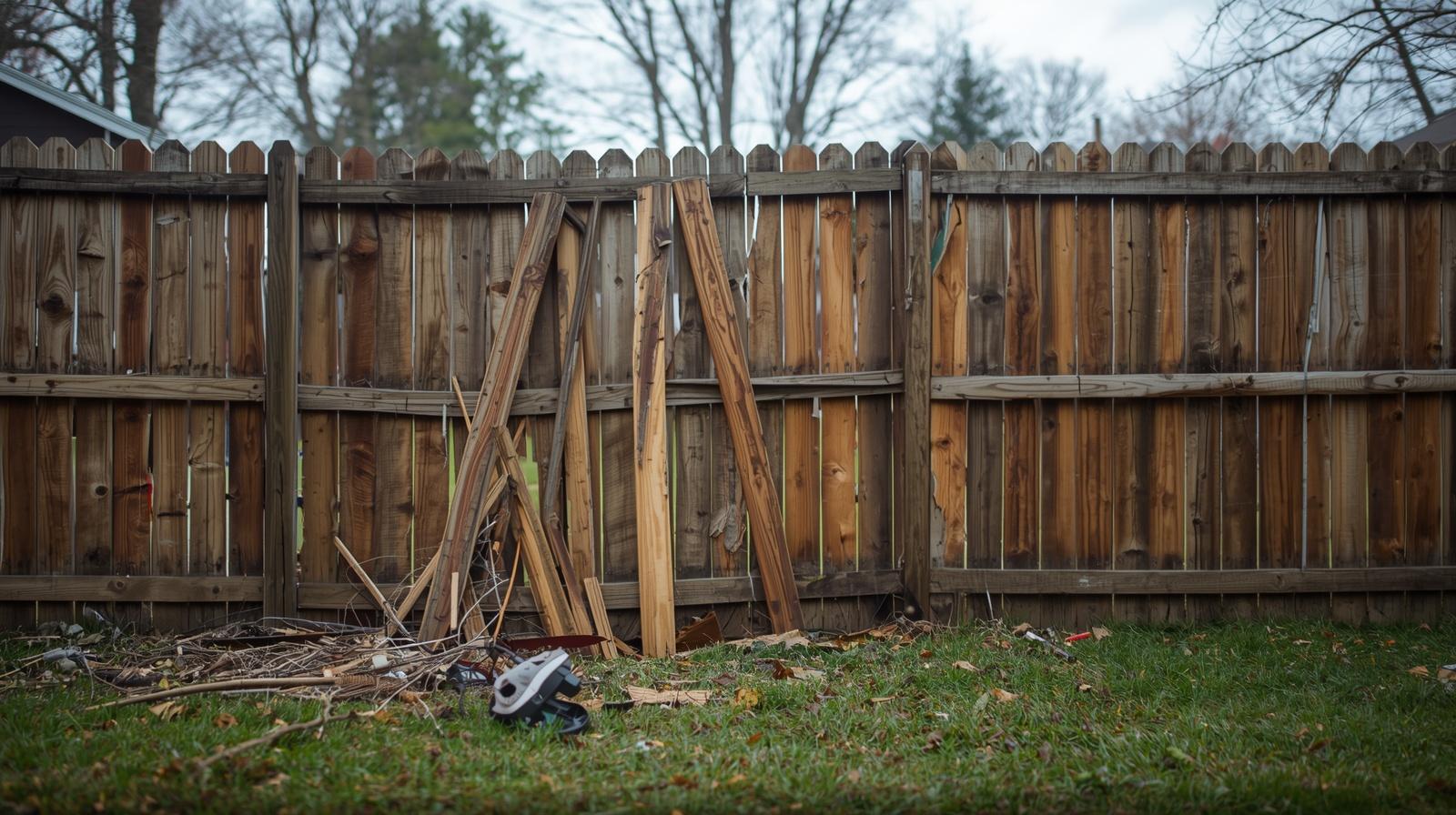
When the sirens stop and the sun comes up in Rockford, seeing your backyard barrier flattened by weather creates an immediate pit in your stomach. The straight-line winds common near the Chicago Rockford International Airport don't just blow over trees; they often turn solid privacy panels into sails.
Your first instinct might be to start cleaning, but local utility guidelines warn that rushing into storm damage repair can be dangerous. Metal chain link conducts electricity from downed power lines, meaning a touch could be fatal if a live wire is hidden in the debris. Before approaching, visually scan for these "hazard identification zones" to ensure the area is clear of electrical risks and unstable, leaning posts.
Once the site is secure, your focus shifts to the 24-hour rule of emergency fence repair. While a few missing pickets are merely cosmetic, a structural failure that lets pets escape through the gap requires temporary patching immediately. Distinguishing between what must be fixed now and what can wait for the insurance adjuster is crucial to managing the recovery process effectively.
Avoid the 'No-Claim' Trap: 3 Critical Documentation Steps to Maximize Your Insurance Payout
Stepping out to survey the yard, the urge to immediately clean up shattered pickets or bent rails is strong. Resist that instinct. Disposing of the mess before documenting storm damage for property insurance is a thousand-dollar mistake many Rockford residents make. Your adjuster needs physical proof to validate the loss, and once that evidence is hauled away by the city, your leverage disappears with it.
To ensure your carrier accepts the claim, borrow the "Wide-to-Close" method used by professional adjusters. Start by standing back near your back door to capture the full scope of the destruction relative to the house, then move in for specific details. This visual narrative distinguishes fresh storm impacts from old rot, which is essential for a successful claim.
Capture these five specific angles to create an undeniable record:
A wide property shot showing the entire fence line.
Close-ups of broken posts where they meet the ground.
Height reference photos using a ruler against the damage.
The view from the neighbor's side (if accessible).
The complete debris pile before disposal.
Even with perfect evidence, do not be surprised if your initial check covers less than the full replacement cost. This is often due to Actual Cash Value (ACV). Much like an older car loses value over time, insurers deduct value for the years your fence stood against Midwest winters. Fortunately, if you have replacement cost coverage, you can often claim that withheld "depreciation" money after the repairs are completed.
Emergency Stabilization: Quick Fixes to Keep Your Dogs In and the Neighbors Out
Once you have documented the damage, your priority shifts to securing the perimeter before nightfall. A compromised fence often acts like a sail, and leaving damaged panels upright during lingering gusts can rip additional posts out of the ground. If a section is severely leaning, the safest immediate step is often disconnecting the heavy fence panel from the posts and laying it flat, effectively removing the wind load that threatens to pull down the rest of your line.
For posts that are leaning but still intact, you need to apply temporary fence stabilization after high winds. This process, known as lateral bracing, works much like a kickstand on a bicycle. Take a spare 2x4 and wedge one end under the top rail of the leaning section, driving the other end into the soil at a 45-degree angle. Secure the base of your brace with a wooden stake to prevent it from slipping in the mud, creating a triangle of support that holds the structure upright until a contractor arrives.
Snapped timber requires a different approach closer to medical first aid. Fixing broken wood fence posts from storm damage usually involves "sistering," which is carpentry shorthand for splinting a broken limb. You can drive a shorter, sturdy stake or metal pipe into the ground directly beside the broken base and screw it tightly into the remaining upper post. This bypasses the fracture point and transfers the weight of the fence onto the new support, keeping your enclosure secure enough for a dog to safely roam the yard.
Large gaps where panels have completely shattered present an immediate security risk that simple bracing cannot fix. If you lack the tools or materials to screw plywood sheets into the remaining horizontal stringers, looking for emergency fence boarding services in Rockford is a viable alternative. These professionals can quickly install temporary chain link or construction hoarding to close off the yard, ensuring that a missing panel doesn't turn into a liability issue with wandering pets or curious neighborhood kids.
With the perimeter temporarily secured and the risk of further collapse minimized, you have bought yourself time to plan the permanent reconstruction. However, hastily digging new post holes without checking local regulations can lead to costly fines or disputes with the house next door.
Boundary Lines and Building Permits: Who Really Pays for the Fence in Winnebago County?
The morning after a storm often starts with an awkward conversation over the back fence—or what’s left of it. A common misconception among homeowners is that if a neighbor’s Oak tree smashes your vinyl panels, they are automatically liable for the bill. In reality, unless you can prove the tree was dead or neglected beforehand by identifying hazardous falling branches on property lines, insurance adjusters generally view this as a weather event rather than negligence. This usually means you must file the claim on your policy to cover the damage, even though the timber originated from the yard next door.
Determining who actually owns the damaged structure is the next logical step before attempting to split costs. In most Rockford subdivisions, the "good neighbor" style of installation is standard, where the finished side (the flat side without visible posts or rails) faces outward toward the adjoining property or street. If the structural stringers and posts are facing your house, the fence is likely yours to maintain. While Illinois law generally supports shared responsibility for partition fences, relying on a handshake deal for expensive repairs is risky; always check your property survey pins to confirm the boundary line before authorizing work.
Once ownership is settled, you need to determine if the city needs to be involved. Minor repairs like swapping a few pickets usually fly under the radar, but Winnebago County building permits for fence replacement become necessary once the scope of work crosses specific thresholds. If you are replacing more than 50% of a fence line or changing the material type (e.g., wood to vinyl), you are no longer doing a "repair"—you are building a new structure in the eyes of the code enforcement officer.
Before you dig new post holes, verify if your project hits these common permit triggers for our area:
Height Restrictions: Any privacy fence exceeding 6 feet generally requires approval and specific structural review.
Corner Lots: Fences extending into the front yard setback or near street intersections often have strict visibility height limits (usually 4 feet).
Utility Easements: You cannot build over municipal drainage or utility lines without risking the city tearing the fence down later for access.
Understanding these rules helps you decide if it is better to strategically repair a few sections or commit to a full teardown. Navigating who pays for fence repair between neighbors and handling the county's paperwork can be exhausting, but knowing the regulations prevents surprise fines.
The $15 vs $50 Decision: Determining If You Need a Patch or a Full Replacement
Making the financial call starts with understanding how the industry bills for service. Most pros quote based on the cost per linear foot for storm damage repairs, but there is a catch: minimum service charges often make small fixes disproportionately expensive. If a contractor has a $500 minimum, repairing a single 8-foot section effectively costs over $60 a foot, whereas replacing the entire line might drop that rate significantly. It often makes more sense financially to replace an aging fence line entirely rather than paying a premium to patch a structure that is already near the end of its lifespan.
Visual inspection requires knowing exactly what to look for on your specific materials to justify that cost. While cedar might just show cosmetic dents that can be ignored, the impact of Rockford hail storms on vinyl fencing often results in "star-burst" fractures or complete shattering near the rail connection points. These cracks compromise the panel's ability to withstand the next heavy wind gust, turning a small hairline fracture into a blown-out section during the next storm.
Structural stability is the ultimate tie-breaker between a quick patch and a full overhaul. A leaning fence usually indicates that the terminal posts—the heavy anchors at the ends and corners—have lost their grip in the soil or rotted at the frost line. If you shake a post and the ground moves with it, simply nailing new boards up is a waste of money because the foundation has failed.
Deciding between professional fence repair vs DIY replacement often comes down to tools and sweat equity. If the posts are solid, sliding in new slats is a manageable Saturday project for most homeowners. However, if the job requires digging out concrete footings or resetting posts, the labor intensity spikes dramatically, usually making it worth paying a professional crew who has the augers and equipment to do it in hours rather than days.
When the damage exceeds your skill set, gathering estimates from local Rockford fencing contractors requires vigilance against transient "storm chasers." These out-of-town crews often demand cash upfront and disappear before the permit is closed, so always ask for a local physical address and proof of insurance before signing a contract.
From Damage to Durable: Your Path to a Storm-Resistant Rockford Property
A clear plan of action restores more than just your property lines; it restores your peace of mind. You now have the knowledge to secure the area safely, handle insurance documentation correctly, and choose a Rockford contractor who values quality over speed. This organized approach turns a chaotic emergency into a manageable project.
Once your fence is restored, consistent care is the best way to protect your wallet from the next storm. Use this checklist to stay ahead of the weather:
Perform a "Post-Wiggle" test to catch loose soil or rot early.
Tighten gate latches and panel screws that vibration loosens.
Scan upward for identifying hazardous falling branches on property lines.
Apply fresh sealant to repel moisture before the freeze-thaw cycle.
Clear wet leaves from the base to stop rot.
Assessing structural integrity of a leaning fence is easier when you know what "solid" feels like during calm weather. Regular seasonal maintenance to prevent future storm damage often reveals minor issues, like a wobbling post, before high winds turn them into major failures. Your home is your sanctuary, and a sturdy fence ensures it stays that way.
