
Understanding Commercial Fence Permits in Rockford
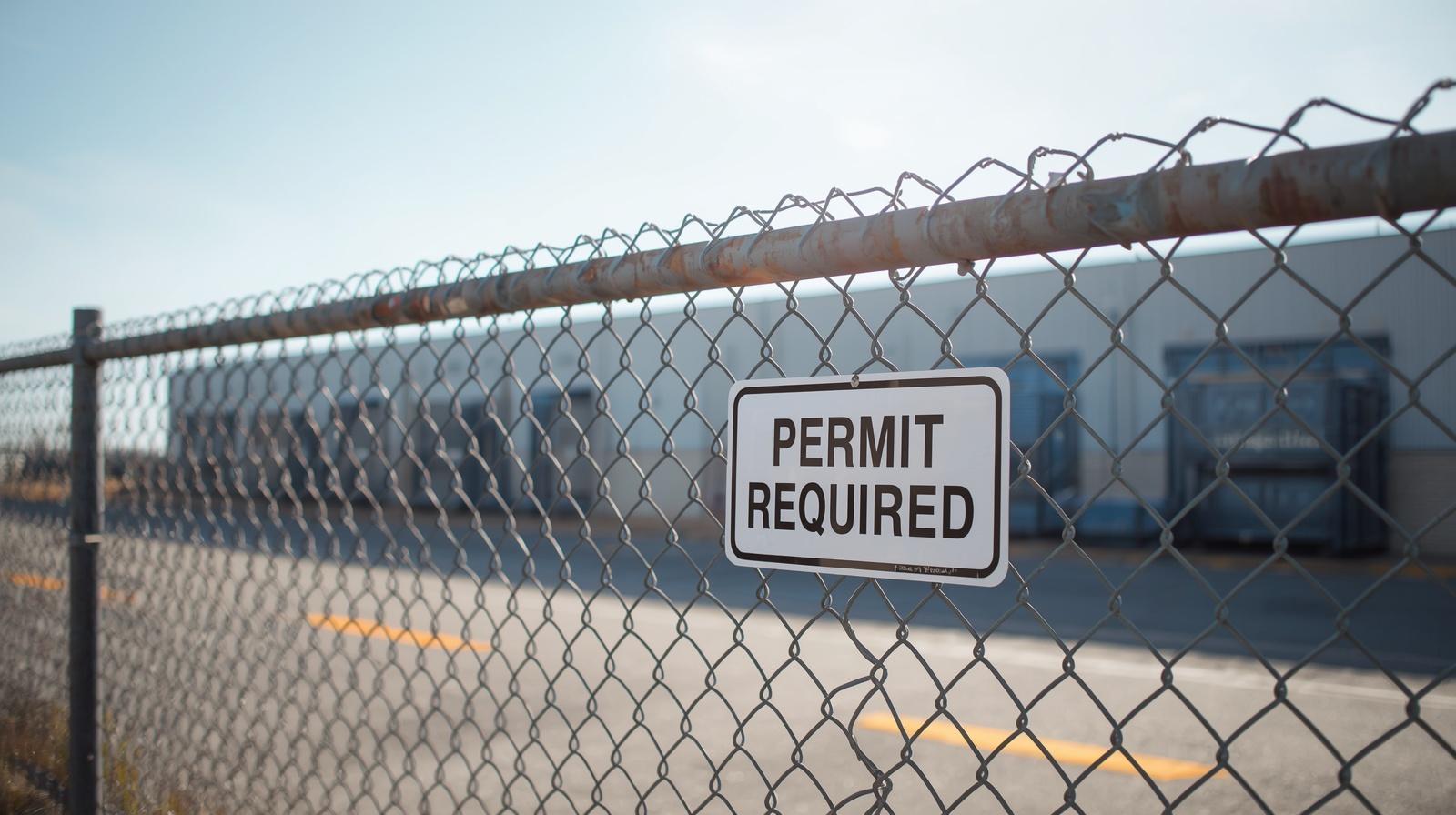
Planning a new fence for your Rockford business? Whether it's for security or curb appeal, the last thing you want is a surprise fine or a stop-work order from the city. Navigating the permit process can feel overwhelming, but it often boils down to a few key rules that determine if you need to apply.
So, do you need a permit for a commercial fence in Rockford? If your planned fence will be taller than four feet, the answer is almost always "yes." But height isn't the only factor. The Rockford fence permit requirements also focus heavily on location; for instance, a short fence on a corner lot may still need a permit to ensure it doesn't block driver visibility.
What about just fixing your current fence? While small repairs don't require approval, replacing more than half of its total length is considered a new installation that requires a permit. Because Rockford commercial vs residential fence rules can differ, it's crucial for businesses to verify these triggers before starting work.
Rockford's Core Fence Rules: Height, Location, and Setbacks Explained
Before you budget for materials, it’s crucial to understand the city’s core requirements. The most common factor is fence height. While specific commercial fence height regulations in Rockford vary, a general rule of thumb is that fences in your front yard are often limited to 4 feet, while those in side or rear yards can typically be taller, sometimes up to 8 feet for security purposes. The location of your fence on the property dictates how tall it can be.
Beyond height, you'll need to account for a critical requirement called a setback. Think of a setback as a mandatory "no-build" zone—a required amount of empty space between your fence and the actual property line, sidewalk, or street. You cannot build your fence directly on the property boundary. This is a primary reason the city requires a recent property line survey for a fence permit; you must prove the proposed fence line respects the setback distance.
The materials you choose also matter, and the Rockford zoning ordinance for fences sets different rules for different business areas. For example, a property in an industrial park may be allowed an 8-foot chain-link fence topped with barbed wire for security. However, that same fence would almost certainly be prohibited for a business in a commercial district bordering a residential neighborhood. The key is knowing which "zone" your business is in.
Understanding these three pillars—height, location, and materials—is the first step. They form the foundation of a compliant project and prevent costly mistakes.
Your 4-Step Checklist for a Successful Permit Application
Knowing the city's rules is half the battle. The permit process is straightforward when you have the right documents in order. To ensure a smooth approval, follow these four key steps:
Gather Your Documents. You will need two critical items. The first is your Plat of Survey, which is the official boundary map of your property that you likely received when you purchased it. The second is a Site Plan—a simple drawing you create showing the property, the proposed fence line, its height, and its distance from property lines (the setbacks).
Identify Your Zoning District. Fence rules change depending on your location. Before filling out any forms, use the City of Rockford’s official mapping tool to confirm your property’s zoning designation (e.g., C-2, I-1). This is one of the first questions on the application.
Complete the Application Form. With your documents and zoning info in hand, you’re ready to fill out the paperwork. You can download the Rockford Fence Permit Application Form directly from the city's website to get started.
Submit Your Package. Finally, bring your completed application form, plat of survey, and site plan to the City of Rockford Construction and Development Services Department for review.
Once your application is submitted, the city begins its review. This kicks off the next phase of the project, which includes plan approval and scheduling inspections.
What Happens After You Apply? The Review and Inspection Process
Once your completed application package is submitted to the Rockford Construction and Development Services Department, it enters a stage called Plan Review. During this phase, a city official double-checks your site plan to ensure the proposed fence meets all local requirements for height, materials, and setbacks. This is the city’s way of catching potential issues on paper before they become expensive problems in the field. For a typical commercial fence, this review process takes approximately 5 to 10 business days. You cannot begin any construction until your permit is officially issued.
After your permit is approved and you’ve paid the required fees, your project can begin. However, the work itself is subject to two critical on-site inspections you must schedule. The first is the Post Hole Inspection. This must happen after your contractor has dug the holes for the fence posts but before any concrete is poured. An inspector will verify the depth and placement of the holes to ensure your fence will have a stable foundation.
The Final Inspection occurs once the entire fence is built. This is the last step, where an inspector confirms the finished project matches the approved plans, from its height and location to the materials used. Only after this final approval is your project officially complete and in compliance with city code. Skipping these mandatory checks can lead to serious headaches and nullify all your careful planning.
The High Cost of Skipping a Permit: What Really Happens If You're Caught
Thinking of building without a permit to save time? The risk to your business’s budget and timeline is significant. If a city official discovers unpermitted work, they will issue a Stop-Work Order. This is an official notice that legally forces all construction to halt immediately. Your project freezes on the spot, leaving you with an idle contractor and a major delay while you try to get back into compliance.
Beyond the immediate project shutdown, financial penalties will follow. The city can levy daily fines for every day the violation continues, turning a single mistake into a recurring expense that directly impacts your bottom line. These fines are designed to make non-compliance far more costly than simply following the permit process from the start.
In the most severe cases—especially if the fence violates major safety or setback rules—the city can issue a Tear-Down Order. This is exactly what it sounds like: a legal mandate requiring you to remove the entire fence at your own expense. You would not only lose your initial investment but would also have to pay for demolition and then start the entire process over again, this time with a permit.
Top 3 Permit Delays and How to Avoid Them
Most permit delays are caused by a few common and avoidable mistakes. Preparing for them ahead of time keeps your project moving forward without costly interruptions. Pay close attention to these frequent stumbling blocks to ensure a smooth review:
An Inaccurate or Incomplete Site Plan. This is the #1 reason for an instant rejection. Your plan must clearly show property lines and the exact proposed fence location. If your setback measurements—the required space between your fence and the sidewalk or property line—are wrong, your application will be sent back. Double-checking your property line survey for the fence permit is a critical step.
Forgetting to Call 811 Before You Dig. Before any digging starts, you are legally required to call 811 (or visit the JULIE website). This is a free service that sends crews to mark the location of underground utility lines like gas, water, and electricity. Digging without these markings is not only dangerous but can also lead to massive fines and liability for any damage caused.
The "My Contractor Handled It" Assumption. While reputable commercial fence contractors in Rockford, IL, are a huge help, the property owner is ultimately responsible. Never assume the permit is secured. Always ask your contractor for a copy of the final, city-issued permit before allowing any work to begin. This simple verification protects your investment.
Ensuring a Smooth and Compliant Fence Project
You have two clear paths forward. For straightforward projects, you're equipped to manage the permit process yourself. However, if your time is better spent running your business, hiring professional commercial fence contractors in Rockford, IL is a smart investment. They navigate this process daily, ensuring your commercial property fencing is done right.
Ultimately, a permit is more than just paper; it’s your project’s blueprint for success. You’re not just avoiding fines—you are proactively building a secure, compliant, and valuable asset for your business from the very first day.
