
Vinyl Fence Installation in Oregon, IL: Is Late Fall Still a Good Time?
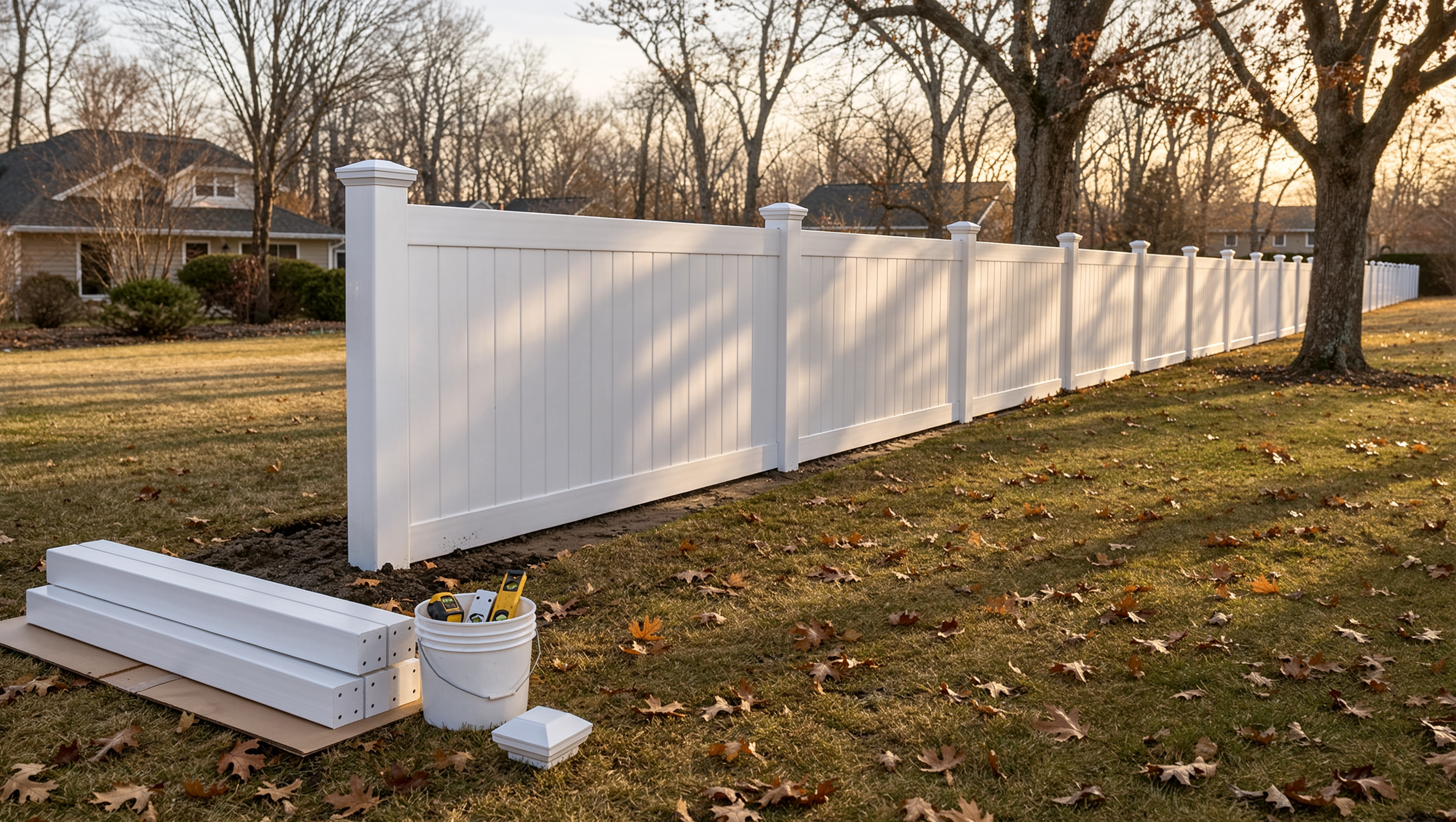
Late fall can still be a workable time for vinyl fence installation in Oregon, IL when the ground remains suitable and the property is ready. Soil conditions, drainage, gate placement, slopes, yard access, and approaching winter weather matter more than the calendar alone. Homeowners should finalize the project early and avoid forcing installation when frozen or saturated ground makes conditions unsuitable.
Late Fall Does Not Automatically Close the Installation Window
Once November arrives, homeowners often assume a new fence has to wait until spring.
That is not always the case.
Vinyl fence installation may still be possible when:
The ground remains workable
Soil is not heavily saturated
Significant snow has not arrived
The fence line is accessible
Project details are finalized
The actual condition of the property matters more than simply looking at the date.
Ground Conditions Are the Biggest Question
Fence posts need stable support.
Late-fall installation becomes more challenging when the soil is:
Frozen
Extremely muddy
Saturated after heavy rain
Covered by significant snow
Conditions can also vary across the same property.
A low area may stay wet while higher sections remain workable.
That is why a site-specific evaluation is important before deciding whether installation should move forward.
Why Vinyl Can Be Appealing Late in the Season
One benefit of vinyl is that it does not need the same routine staining or sealing associated with wood.
Once installed, homeowners do not have to rush to schedule a separate finishing step before winter.
Routine care typically involves:
Occasional cleaning
Checking posts
Inspecting rails
Testing gates
Monitoring hardware
This can make vinyl appealing for homeowners who want lower routine surface maintenance.
Choose the Right Vinyl Style Before Installation
Late fall is not an ideal time for major design changes after the project has started.
Decide early whether you want:
Full-privacy vinyl
Semi-private vinyl
Picket-style vinyl
A combination of styles
Each design creates a different balance of privacy, airflow, visibility, and appearance.
Full-Privacy Vinyl for Backyard Screening
Solid vinyl panels can provide consistent screening around areas such as:
Patios
Neighbor-facing boundaries
Side yards
Dog areas
This can be especially useful in late fall when leaves disappear and neighboring properties become more visible.
Full-privacy fencing does catch more wind than open styles, so exposed sections require careful structural planning.
Semi-Private Vinyl Can Keep the Yard More Open
Not every boundary needs full screening.
Semi-private vinyl can provide separation while allowing more:
Airflow
Light
Visual openness
It may be a better fit along parts of the property where privacy matters but a completely solid wall would feel unnecessary.
Using different privacy levels in different areas can make the backyard feel more balanced.
Let Fall Sightlines Influence the Layout
Trees and shrubs may provide significant screening during summer.
Once leaves drop, homeowners often discover views that were previously hidden.
Look from:
Patio seating
Back doors
Decks
Side-yard walkways
Notice which neighboring windows, driveways, or outdoor areas become visible.
This can help determine exactly where full-privacy vinyl would be most useful.
Choose Fence Height With Purpose
Fence height should support the actual goal of the project.
Think about whether the fence is mainly for:
Privacy
Pet containment
Property definition
Outdoor living space
Choosing more height than necessary can make a yard feel enclosed and increase wind exposure.
Applicable local requirements should be reviewed before finalizing fence height and placement.
Plan Gate Locations for All Seasons
Gate placement can affect how convenient the fence feels every day.
Think about common routes between:
Driveway and backyard
Garage and lawn
House and patio
Side yard and storage space
Then consider how those routes change during winter.
A gate that works well in fall may become inconvenient if snow is routinely piled in front of it.
Measure Equipment Before Choosing a Wide Gate
If a riding mower, trailer, or landscaping equipment needs backyard access, measure it before deciding on gate width.
Do not rely on estimates.
A wider gate may be needed for:
Riding mowers
Utility trailers
Garden carts
Landscaping equipment
Wide gates require appropriate post and hardware support, so they should be included in the original design.
Review Drainage Before Posts Are Installed
Fall rain can reveal important information about the property.
Walk the proposed fence line after wet weather and look for:
Standing water
Soft soil
Washout
Erosion
Downspout runoff
Vinyl itself does not rot, but the posts still depend on stable soil.
Persistent drainage problems can eventually contribute to leaning sections or gate alignment issues.
Stable Ground Matters Even With Low-Maintenance Vinyl
Low maintenance should not be confused with no maintenance.
If soil moves around a post, the fence may develop:
Uneven sections
Ground gaps
Gate problems
Leaning
Addressing drainage and erosion before installation can help reduce structural issues later.
Slopes Need a Clear Installation Plan
Changing grade can affect how vinyl sections follow the yard.
Depending on the fence system, sections may need to be stepped or installed to follow the terrain more closely.
Slopes can create challenges involving:
Bottom clearance
Gate operation
Pet containment
Panel appearance
These details should be reviewed while the ground is still visible.
Vinyl Can Work Well for Dog Owners
Full-privacy vinyl can be useful for dogs that react strongly to outside activity.
Solid panels can reduce views of:
Neighboring dogs
Pedestrians
Wildlife
Passing vehicles
Pet security also depends on fence height, bottom gaps, gate latches, slopes, and digging behavior.
After installation, inspect the entire lower fence line before allowing dogs to use the yard freely.
Consider Winter Wind Exposure
Solid vinyl fencing catches more wind than chain link or ornamental fencing.
Pay close attention to:
Long exposed runs
Corners
End posts
Gate posts
If full privacy is only needed around one portion of the yard, using semi-private or more open fencing elsewhere may provide a better balance.
Prepare the Yard Before Installation Day
Late-fall installation goes more smoothly when the work area is easy to access.
Clear the proposed fence line of:
Leaf piles
Hoses
Planters
Toys
Yard tools
Seasonal decorations
Heavy leaves can hide uneven soil, drainage paths, and old concrete.
Clearing them also makes it easier to evaluate the true condition of the yard.
Trim Vegetation That Blocks the Fence Line
Shrubs, vines, and low branches can interfere with post placement.
Trim back vegetation that directly blocks the planned route.
Be cautious around major tree roots.
Sometimes adjusting the fence line slightly is more practical than disturbing an established root system.
Replacement Projects Need Extra Preparation
If the vinyl fence is replacing an older fence, account for removal work.
The existing fence may include:
Panels or boards
Posts
Gates
Hardware
Concrete footings
Ask whether removal, hauling, and cleanup are included in the project.
Old concrete may also affect where new posts can be placed.
Plan for Pets During Installation
A partially completed fence should not be treated as secure containment.
Keep dogs away from:
Open post holes
Tools
Materials
Unfinished sections
Use indoor supervision, leash walks, or another secure area until the entire fence and all gates are complete.
Protect Vinyl From Hard Winter Impacts
Vinyl can become less flexible during severe cold.
Once winter arrives, avoid striking the fence with:
Snow shovels
Snowblowers
Yard equipment
Vehicles
Plan snow-removal routes with enough clearance from panels and gates whenever possible.
When Waiting Until Spring Is the Better Choice
Late-fall installation should not be rushed simply to finish before winter.
Waiting may make more sense when:
The ground becomes consistently frozen
Soil remains heavily saturated
Significant drainage work is required
The layout is still uncertain
Yard access cannot be prepared
Suitable site conditions are more important than meeting an arbitrary seasonal deadline.
Final Questions to Answer Before Moving Forward
Before scheduling a late-fall vinyl fence project, make sure you know:
Where the fence will go
Which vinyl style you want
How much privacy is needed
Fence height
Gate locations and widths
Drainage concerns
Pet requirements
Removal responsibilities
Winter access needs
A clear plan makes it easier to move forward when weather and ground conditions cooperate.
Request a Free Vinyl Fence Estimate
Arrow Fence helps Oregon homeowners plan vinyl fencing around privacy, pets, gates, drainage, slopes, yard access, and seasonal conditions.
Whether you are considering full-privacy vinyl, semi-private fencing, replacement, or a new installation, Arrow Fence can help you review practical options for your property.
Contact Arrow Fence at arrowfencerockford.com to request a free estimate for your vinyl fence project.
