
Vinyl Fence Installation in Roscoe, IL: Is Late Fall Still a Good Time?
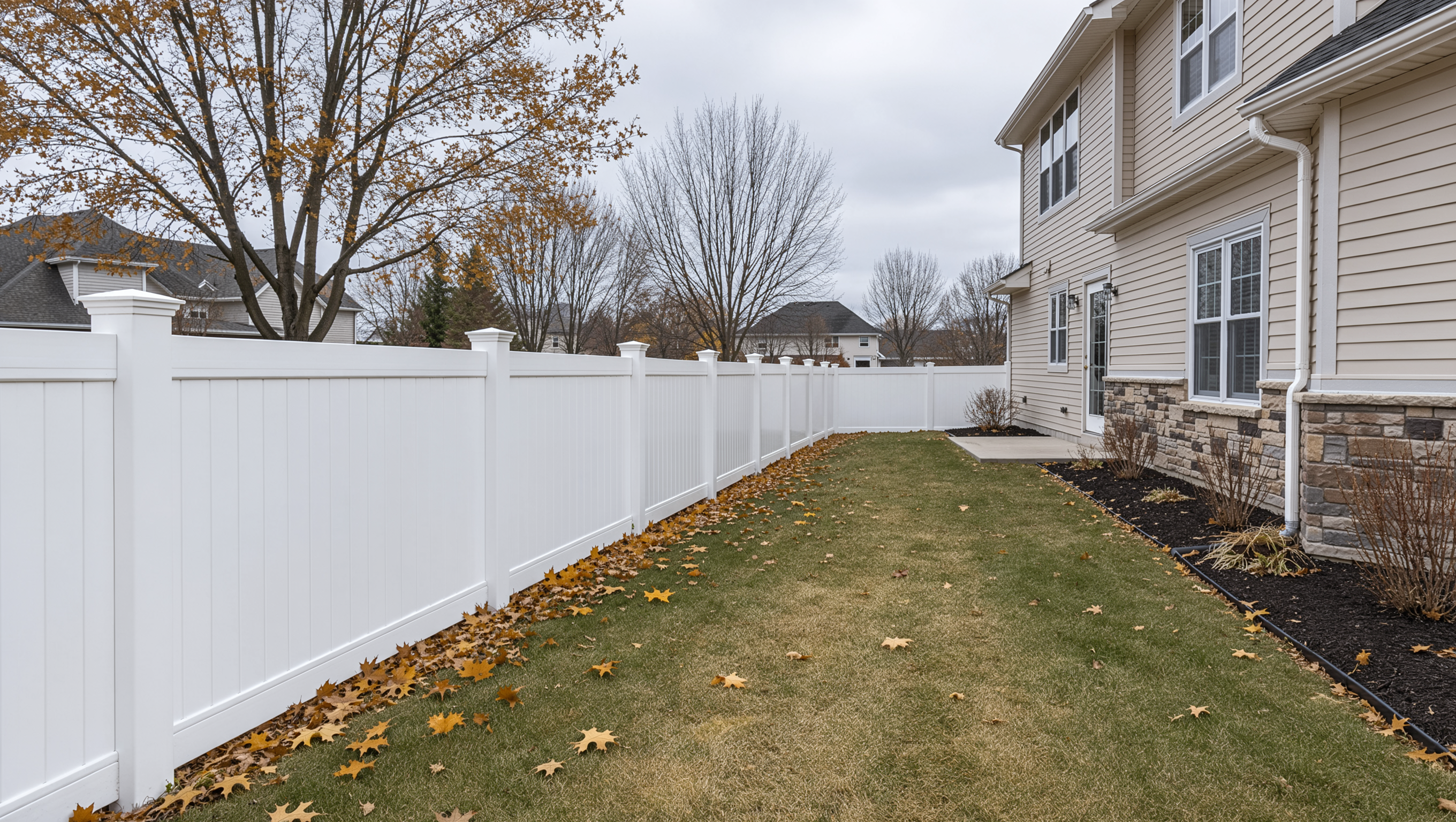
Late fall can still be a reasonable time for vinyl fence installation in Roscoe if the soil remains workable and the property is properly prepared. Ground conditions, drainage, slopes, gate placement, yard access, and approaching winter weather matter more than the calendar alone. Homeowners should finalize the layout early and avoid rushing installation when conditions are no longer suitable.
Late Fall Does Not Automatically Mean It Is Too Late
Cool November weather does not necessarily rule out a vinyl fence project.
The bigger question is whether the ground and property conditions still allow the fence to be installed properly.
A late-fall project may remain practical when:
The soil is workable
The yard is not saturated
Heavy snow has not arrived
The fence line is accessible
The project details are already settled
As winter gets closer, preparation becomes increasingly important.
Pay Attention to the Soil, Not Just the Temperature
Fence posts need dependable support.
Conditions can become more challenging when the soil is:
Frozen
Extremely wet
Muddy
Covered by significant snow
Recent weather can make one Roscoe property suitable for installation while another nearby yard needs more time.
This is why actual site conditions should guide the decision.
Why Vinyl Appeals to Homeowners Planning Late in the Year
Vinyl offers a clean appearance without the routine staining or sealing associated with wood.
That can be useful for homeowners installing a fence close to winter because there is no immediate finishing project to schedule afterward.
Routine vinyl fence care generally focuses on:
Cleaning when needed
Inspecting posts
Checking rails
Testing gates
Monitoring hardware
It is still important to maintain the structure, even though the surface itself needs relatively little upkeep.
Choose the Right Level of Privacy
Vinyl comes in more than one style.
Before installation, decide how much screening the yard actually needs.
Full-Privacy Vinyl
Solid panels can work well around:
Patios
Dog areas
Side yards
Neighbor-facing boundaries
They provide consistent screening but also catch more wind than open styles.
Semi-Private Vinyl
Semi-private designs provide separation while allowing more airflow and light.
They can be useful when homeowners want privacy without creating a completely enclosed backyard.
Picket-Style Vinyl
Picket fencing works better when property definition is more important than screening.
It can help preserve an open view around landscaped or front-yard areas.
Match the Fence to the Yard Instead of Using One Style Everywhere
A property does not necessarily need the same vinyl style on every side.
For example, full privacy may make sense beside a neighboring patio while a semi-private section may work better along a more open rear boundary.
Planning by function can create a backyard that feels more balanced.
It may also reduce unnecessary solid fencing in areas where privacy is not important.
Review Winter Sightlines
Late fall can reveal privacy needs that were hidden during summer.
Once trees and shrubs lose their leaves, homeowners may notice new views toward:
Neighboring homes
Roads
Driveways
Nearby outdoor areas
Walk the yard before deciding where full-privacy panels belong.
Winter sightlines can help you avoid installing solid fencing in the wrong place.
Finalize Height Before Work Begins
Fence height should support the purpose of the project.
Consider whether you need the fence primarily for:
Privacy
Dogs
Property definition
Outdoor living space
Taller is not automatically better.
Additional height can change the appearance of a yard and increase wind exposure.
Applicable local requirements should be reviewed before final placement and height are selected.
Gate Placement Deserves Extra Thought in Fall
A gate should make everyday movement easier throughout the year.
Before deciding on its location, consider routes between:
The driveway and backyard
Garage and side yard
House and patio
Yard and storage area
Then consider how those same routes change once snow arrives.
A convenient summer gate may become difficult to use if snow is routinely piled in front of it.
Measure for Equipment Access
If larger equipment needs to pass through the fence, measure it before selecting gate width.
That could include:
Riding mowers
Garden carts
Trailers
Landscaping equipment
Wider gates require appropriate support.
Choosing the opening based on actual equipment can prevent unnecessary width while still providing practical access.
Check Drainage While Fall Rain Makes Problems Visible
Late fall can be a good time to identify drainage issues.
After rainfall, inspect the proposed fence line for:
Standing water
Soft ground
Erosion
Downspout runoff
Low spots
Vinyl does not rot, but the fence still depends on posts installed in stable ground.
Persistent water problems can contribute to soil movement, post shifting, and gate alignment issues.
A Low-Maintenance Fence Still Needs Stable Ground
It is easy to focus on vinyl's low surface maintenance and overlook what happens underneath it.
If soil erodes around posts, the fence may eventually:
Lean
Develop uneven sections
Create bottom gaps
Lose gate alignment
Addressing drainage or erosion during planning can help prevent structural problems later.
Slopes Can Change the Installation Approach
Roscoe yards may include gradual or more noticeable changes in elevation.
Depending on the vinyl system, sections may need to be stepped or installed to follow the grade more closely.
Pay particular attention to slopes near:
Gates
Corners
Dog areas
Poorly planned grade transitions can leave unnecessary gaps underneath the fence.
Plan Carefully for Dogs
Full-privacy vinyl can be useful for dogs that react to activity outside the yard.
Solid panels can reduce views of:
Neighboring pets
Wildlife
Pedestrians
Passing vehicles
Pet owners should also consider:
Fence height
Ground clearance
Gate latches
Digging behavior
Privacy and secure containment are related, but they are not the same thing.
Wind Exposure Is Important With Solid Vinyl
Full-privacy fencing presents a larger surface to the wind than chain link or ornamental styles.
Pay attention to areas that are particularly open or exposed.
Important locations include:
Long straight fence runs
Corners
End posts
Gate posts
If complete privacy is unnecessary along an exposed boundary, a semi-private design may be worth considering.
Clear the Fence Line Before Installation
A late-fall yard can quickly become covered in leaves and seasonal clutter.
Before work begins, clear items such as:
Leaf piles
Hoses
Planters
Yard tools
Toys
Patio furniture
Removing debris helps reveal the true ground conditions and gives crews a clearer area to work.
Trim Back Plants That Interfere With the Layout
Shrubs, vines, and low branches can block proposed post locations.
Trim vegetation where needed, but be cautious around established tree roots.
Large roots can affect where posts can reasonably be placed.
Sometimes adjusting the fence line slightly makes more sense than disturbing a major root system.
Think About How Materials Will Reach the Backyard
Access can influence how smoothly a fence project moves.
Look for obstacles such as:
Narrow side yards
Existing gates
Steps
Dense landscaping
Tight corners
Providing a clear route for materials can be particularly helpful late in the season when daylight is shorter.
Replacement Projects Require Additional Preparation
If the vinyl fence is replacing an older fence, the project may involve more than new installation.
Removal can include:
Old panels or boards
Posts
Gates
Hardware
Concrete footings
Old footings may also interfere with the planned locations of new posts.
Ask what removal, hauling, and cleanup are included in the project scope.
Keep Pets Safe During Installation
An unfinished fence line is not a secure pet enclosure.
During installation, use another arrangement such as:
Indoor supervision
Leash walks
Another enclosed area
Keep pets away from open post holes, tools, and materials.
After installation, check the entire perimeter and gate operation before allowing dogs to use the yard normally.
Understand Vinyl in Very Cold Weather
Vinyl can become less flexible during severe cold.
Once winter arrives, homeowners should avoid hard impacts from:
Snowblowers
Shovels
Yard equipment
Vehicles
Plan snow-removal routes with enough clearance from the fence whenever possible.
This is particularly important near gates and corners.
When Waiting Until Spring Makes Sense
Late-fall installation should not be treated as a deadline at any cost.
Waiting may be the better option when:
The soil is consistently frozen
The yard is saturated
Significant drainage work is needed
The layout is still undecided
Site access has not been prepared
A properly planned installation under suitable conditions is more important than forcing the project into a narrow seasonal window.
Get the Details Settled Before Installation
Before moving forward, confirm:
Vinyl style
Fence height
Fence line
Privacy areas
Gate locations
Gate widths
Drainage concerns
Old-fence removal
Pet needs
Winter access
Having these decisions ready makes a late-season project much easier to manage.
Request a Free Vinyl Fence Estimate
Arrow Fence helps Roscoe homeowners plan vinyl fencing around privacy, pets, gates, slopes, drainage, yard access, and seasonal conditions.
Whether you are considering full-privacy vinyl, semi-private fencing, replacement, or a completely new installation, Arrow Fence can help you review practical options for your property.
Contact Arrow Fence at arrowfencerockford.com to request a free estimate for your vinyl fence project.
