
Vinyl Fence Maintenance in Dixon, IL: Fall Checklist for Homeowners
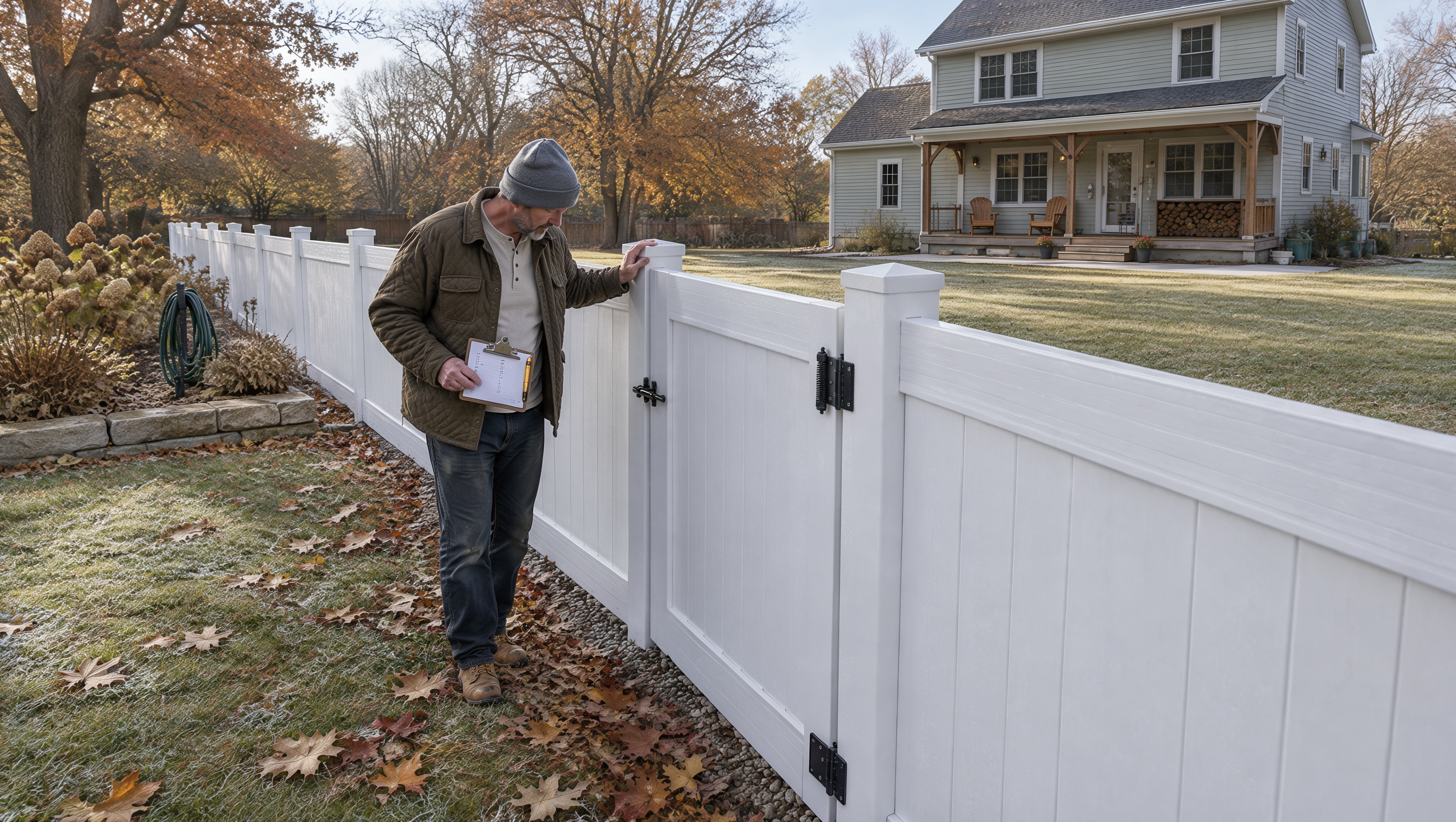
Vinyl fencing needs less routine surface maintenance than wood, but fall is still an important time to check posts, panels, rails, gates, hardware, drainage, and ground gaps. Dixon homeowners should look for movement, cracks, loose components, and areas where leaves or water collect before winter weather makes small issues harder to inspect.
Start With a Full Fence Walk
Begin with a slow walk around the entire fence line.
Look for anything that seems different from earlier in the year, including:
Uneven panels
Leaning posts
Loose rails
Gate alignment changes
Ground gaps
Visible cracks
Stand at one end of long fence runs and look down the line.
Small alignment changes can be easier to notice from a distance than when standing directly beside the fence.
Check Every Post for Movement
Vinyl does not rot like wood, but the posts still depend on stable soil and footings.
Look for posts that:
Lean
Move at the base
Sit in soft soil
Have gaps around them
Appear out of line
A moving post can affect several connected panels.
If more than one post is shifting, drainage or soil conditions may be contributing to the problem.
Inspect the Ground Around Posts
Fall rain can reveal areas where water is affecting the fence line.
Check for:
Standing water
Erosion
Mud
Soft ground
Exposed footing material
Water can gradually remove support around a post even when the vinyl itself remains in good condition.
If the same area repeatedly becomes saturated, the drainage issue should be considered before winter.
Clear Leaves From the Fence Base
Leaves often collect along solid vinyl fences because wind cannot pass through them as easily as open fencing.
Remove buildup around:
Posts
Panels
Gates
Corners
Wet leaves can hide erosion, soil movement, and ground gaps.
Clearing them also helps prevent debris from blocking normal water flow through the yard.
Look for Cracked Vinyl Components
Walk close to the fence and inspect panels, rails, and other visible components for cracks.
Pay special attention to areas near:
Gates
Corners
High-traffic zones
Driveways
Yard equipment routes
Cold temperatures can make vinyl less flexible.
An existing crack may become more vulnerable to impact once winter arrives.
Check Whether Rails Are Secure
Rails help connect and support vinyl fence sections.
Look for:
Loose rails
Sections pulling apart
Uneven connections
Panels sitting differently than nearby sections
If a rail repeatedly shifts, check the supporting posts before assuming the rail itself is the only problem.
Post movement can affect the entire section.
Test Every Gate
Open and close each vinyl gate several times.
The gate should move smoothly without:
Dragging
Sagging
Rubbing against a post
Missing the latch
Requiring extra force
A gate that works poorly in fall may become more difficult to use once snow and ice reduce clearance.
Do not wait until winter to investigate a noticeable alignment issue.
Inspect Gate Posts
Gate posts carry more stress than standard line posts.
Check both the hinge and latch sides for:
Leaning
Movement
Soil erosion
Uneven gaps
A moving hinge post can cause sagging.
A shifting latch post can make the opening wider or narrower and prevent the latch from lining up correctly.
Tighten Loose Gate Hardware
Inspect hinges, latches, screws, bolts, and other hardware.
Look for:
Loose fasteners
Bent components
Worn hardware
Mounting points that move
If the gate frame and posts are stable, a small hardware repair may be enough.
If the same hardware keeps coming loose, inspect the surrounding support before repeatedly tightening it.
Check Ground Clearance
Leaves, soil, mulch, and seasonal ground movement can reduce clearance under a gate.
Clear debris and check whether the gate still swings freely.
For homes with dogs, also make sure the gap is not becoming too large.
The goal is enough clearance for reliable operation without creating an unnecessary escape point.
Inspect Sloped Areas
Slopes can create uneven gaps beneath vinyl fencing.
Check sections where the fence:
Steps
Follows the grade
Meets a gate
Changes elevation
Look for new openings caused by erosion or soil settlement.
Pet owners should pay special attention to these transitions.
Watch for Drainage Along Solid Panels
Full-privacy vinyl can change how leaves and debris collect around a yard.
Make sure the fence line is not trapping material that blocks runoff.
After rain, check whether water is:
Pooling near posts
Moving toward gates
Washing soil away
Collecting in low areas
A low-maintenance fence still needs stable ground underneath it.
Trim Vegetation Touching the Fence
Shrubs, vines, and branches should not be left pressing heavily against panels.
Trim vegetation that:
Rubs against the fence
Blocks inspection
Interferes with gates
Hides post bases
This also reduces the chance of branches striking panels during winter wind or heavy snow.
Check Nearby Tree Limbs
Look above the fence as well as along it.
Weak or overhanging branches can damage:
Panels
Rails
Gates
Posts
Snow and ice can add weight to tree limbs.
Removing obvious hazards before winter can reduce the risk of impact damage.
Pay Extra Attention to Wind-Exposed Sections
Solid vinyl privacy fencing catches more wind than open fence styles.
Inspect:
Long straight runs
Corners
End posts
Gate areas
If a section moves noticeably during windy weather, check the posts and connections.
Movement can be a sign that support has weakened or the surrounding soil has changed.
Wash Off Dirt Before Freezing Weather
Vinyl is generally easy to clean.
Fall can be a convenient time to remove:
Dirt
Mud
Grass clippings
Surface buildup
Use cleaning methods appropriate for the fence manufacturer and avoid overly aggressive tools that could damage the surface.
Cleaning also makes cracks, loose sections, and hardware issues easier to see.
Avoid Hard Impacts in Cold Weather
Once temperatures fall significantly, vinyl can become less flexible.
Be careful when using:
Snow shovels
Snowblowers
Yard equipment
Vehicles
Avoid striking panels, posts, or gates.
A hard impact that causes little trouble in warmer weather may be more damaging during severe cold.
Plan Where Snow Will Be Stored
Before winter, decide where snow will go.
Avoid piling heavy snow directly against:
Gates
Weak posts
Damaged panels
Corners
Snow pressure can add unnecessary stress.
Frequently used gates should also stay clear enough to open throughout winter.
Check for Pet Escape Points
If dogs use the yard, inspect the entire lower fence line.
Look for:
New ground gaps
Openings near gates
Erosion
Loose lower sections
Snow can hide these openings later.
Fall is a good time to correct them while the entire fence line remains visible.
Know What Needs Repair Now
Not every small cosmetic issue requires immediate attention.
Prioritize problems involving:
Moving posts
Cracked components
Loose rails
Gate failure
Drainage-related movement
Pet escape gaps
These issues can affect fence function and stability.
Surface dirt or minor cosmetic marks can usually wait.
When a Small Repair May Be Enough
Targeted repair may make sense when:
One rail is loose
A latch needs adjustment
A small component is damaged
One post has limited movement
Damage is isolated
If surrounding sections remain stable, a broader replacement may not be necessary.
When to Consider More Extensive Work
A larger repair or partial replacement may be worth considering when:
Several posts have moved
Multiple panels are cracked
Gates repeatedly lose alignment
Long sections sit unevenly
Drainage keeps affecting the same area
Repeated problems may indicate that the issue extends beyond one component.
Fall Vinyl Fence Checklist for Dixon Homeowners
Before winter, check:
Posts
Panels
Rails
Gates
Hinges and latches
Ground clearance
Drainage
Erosion
Leaves and debris
Vegetation
Tree branches
Pet gaps
A simple fall inspection can help keep a low-maintenance vinyl fence working reliably through the colder months.
Request a Free Vinyl Fence Repair Estimate
Arrow Fence helps Dixon homeowners inspect, repair, and maintain vinyl fencing before winter.
Whether the issue involves moving posts, loose rails, cracked components, gate alignment, drainage, or a larger damaged section, Arrow Fence can help you review practical repair or replacement options.
Contact Arrow Fence at arrowfencerockford.com to request a free estimate for your vinyl fence project.
