
Wood Fence Maintenance Before Winter in Belvidere, IL: Practical Checklist
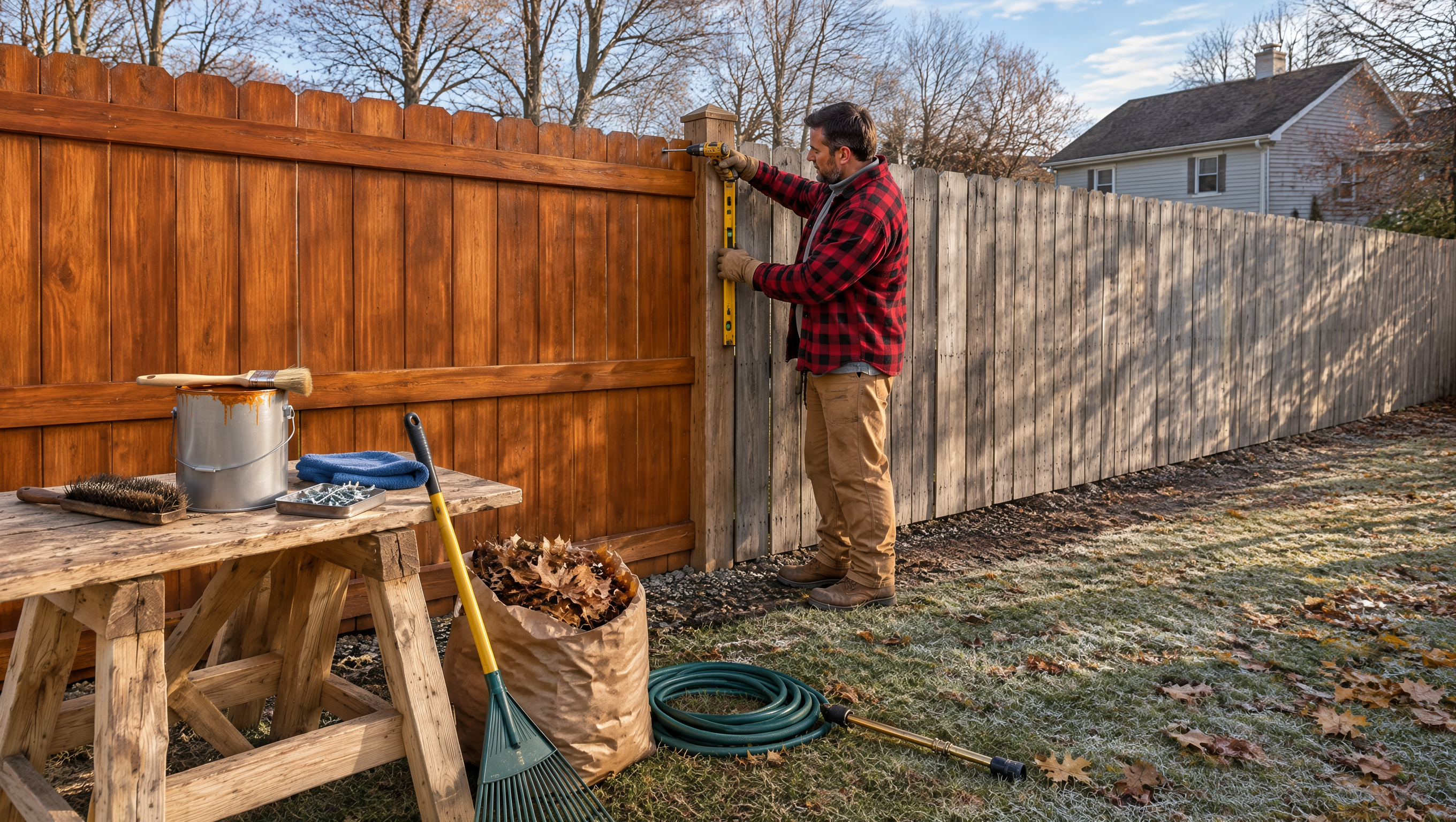
Before winter arrives in Belvidere, homeowners should inspect wood fencing for loose boards, weak posts, damaged rails, gate problems, moisture buildup, rot, and drainage issues. A practical fall maintenance check can help reduce the chance that snow, ice, wind, and freeze-thaw conditions turn small problems into larger repairs.
Walk the Entire Fence Line First
Start with a slow walk around the fence.
Look for anything that appears different from earlier in the season, including:
Leaning sections
Loose boards
Uneven rails
Sagging gates
Ground gaps
Viewing the fence from several angles can make alignment problems easier to spot.
Pay special attention to corners, gates, and long sections that face open areas.
Check Wood Posts for Movement
Posts carry the weight of the fence and help keep everything aligned.
Apply light pressure to questionable posts and look for movement at the base.
Warning signs include:
Leaning
Soft wood near the ground
Cracking
Soil gaps
Exposed footing material
A weak post can affect nearby rails, boards, and gates as winter conditions add more stress.
Inspect the Soil Around Each Post
Sometimes the problem is not the post itself.
Check surrounding soil for:
Erosion
Soft ground
Standing water
Washout
Downspout runoff
Water that repeatedly moves around the base can reduce soil support.
If a post keeps shifting, drainage should be considered before simply resetting it.
Look for Rot Near Ground Level
Wood near the soil line is especially important to inspect.
Probe suspicious areas visually and look for:
Soft surfaces
Crumbling wood
Deep splits
Dark deterioration
Weak fastener points
The upper portion of a post may look solid while damage develops lower down.
Fall inspection is useful because snow may soon cover these areas.
Tighten Loose Boards
Loose boards can rattle or move during strong wind.
Check for boards that are:
Pulling away from rails
Missing fasteners
Warped
Cracked
Split
If the board itself is sound, securing it may be enough.
Boards that are badly deteriorated may be better replaced before winter.
Inspect Rails Carefully
Rails connect fence sections and support multiple boards.
Check for:
Cracks
Sagging
Rot
Loose connections
Separation from posts
If several boards move together, the rail may be the real problem.
Repairing the support structure first helps prevent repeat issues.
Check Fasteners and Hardware
Look over screws, nails, brackets, and other connections.
Watch for:
Loose fasteners
Rusted hardware
Missing pieces
Pulled connections
Small hardware problems are easier to address before snow and ice make access more difficult.
Any fastener that no longer holds securely may indicate damaged wood underneath.
Test Every Gate
Open and close each gate several times.
Look for:
Dragging
Sagging
Latch misalignment
Loose hinges
Uneven side gaps
Do not wait until the gate stops working completely.
Snow buildup can make existing clearance problems worse.
Check the Gate Posts
A gate may appear to have a hardware problem when the real issue is a moving post.
Inspect both the hinge and latch posts for:
Leaning
Base movement
Rot
Erosion
Wide equipment gates deserve extra attention because their weight puts more stress on the support posts.
Clear Leaves From the Fence Base
Leaves often collect along wood fences during fall.
Remove buildup around:
Posts
Lower boards
Gates
Corners
Wet leaves can hold moisture against wood and hide early deterioration.
Clearing them also makes drainage and ground gaps easier to inspect.
Trim Vegetation Touching the Fence
Shrubs, vines, and branches can trap moisture or rub against fence boards.
Trim vegetation that:
Presses against boards
Blocks inspection
Hangs over the fence
Keeps lower areas constantly damp
Leave enough access for future maintenance.
Plants can remain part of the landscape without staying in constant contact with the wood.
Watch for Overhanging Branches
Winter snow and ice can add weight to tree limbs.
Inspect nearby branches that could fall onto:
Panels
Rails
Posts
Gates
Removing obvious hazards before winter can reduce the chance of impact damage.
Be especially careful around already weakened fence sections.
Check Drainage Along the Fence Line
Walk the yard after rain if possible.
Look for areas where water collects or runs directly toward the fence.
Repeated moisture can contribute to:
Soil movement
Post instability
Rot near the base
Ground gaps
Do not allow leaves or landscaping debris to block natural drainage paths.
Look for Gaps Under the Fence
Ground gaps can increase as soil erodes or settles.
These openings matter especially for homes with dogs.
Check near:
Gates
Slopes
Corners
Low spots
Correct the cause where possible rather than only filling the visible opening.
If erosion is creating the gap, drainage may need attention too.
Check Privacy Sections for Wind Movement
Solid wood privacy fences catch more wind than open styles.
During breezy weather, watch for:
Excessive movement
Loose boards
Moving posts
Flexing sections
A little movement may be normal, but noticeable instability should be inspected.
Long exposed runs and corners deserve particular attention.
Review the Fence Finish
Wood finishes can help protect the surface from moisture.
Look for areas where the existing finish appears:
Worn
Peeling
Uneven
Bare
Whether refinishing makes sense depends on the condition of the wood and weather conditions.
Structural repairs should take priority over appearance.
Keep Snow Storage Away From Weak Sections
Think ahead about where snow will be shoveled or blown.
Avoid creating heavy snow piles against:
Weak panels
Gates
Leaning posts
Corners
Snow pressure can add stress to already damaged areas.
Keep frequently used gates clear enough to open throughout winter.
Prioritize Structural Repairs First
Not every cosmetic issue needs immediate attention before cold weather.
Focus first on problems that affect:
Stability
Gate operation
Pet security
Connected fence sections
Examples include loose posts, damaged rails, severe rot, and gates that no longer close properly.
Surface appearance can often wait until conditions are better.
Know When Repair May Not Be Enough
Localized repairs may work well when only a few parts are damaged.
Replacement may be worth considering when:
Multiple posts are failing
Rot is widespread
Large sections lean
Gates repeatedly lose alignment
Repairs keep returning
The overall condition of the fence should guide the decision.
Practical Pre-Winter Checklist
Before winter in Belvidere, check:
Post stability
Rot near the ground
Loose boards
Rail condition
Fasteners
Gates and hinges
Drainage
Ground gaps
Leaf buildup
Vegetation
Overhanging branches
Wind-exposed sections
A focused inspection now can make winter maintenance easier and help identify repairs while the fence line is still fully visible.
Request a Free Wood Fence Repair Estimate
Arrow Fence helps Belvidere homeowners maintain and repair wood fencing before winter.
Whether your fence has loose boards, leaning posts, damaged rails, gate problems, rot, or drainage-related issues, Arrow Fence can help you review practical repair or replacement options.
Contact Arrow Fence at arrowfencerockford.com to request a free estimate for your wood fence project.
