
Wood Fence Maintenance in Oregon, IL: What to Do Before Snow Arrives
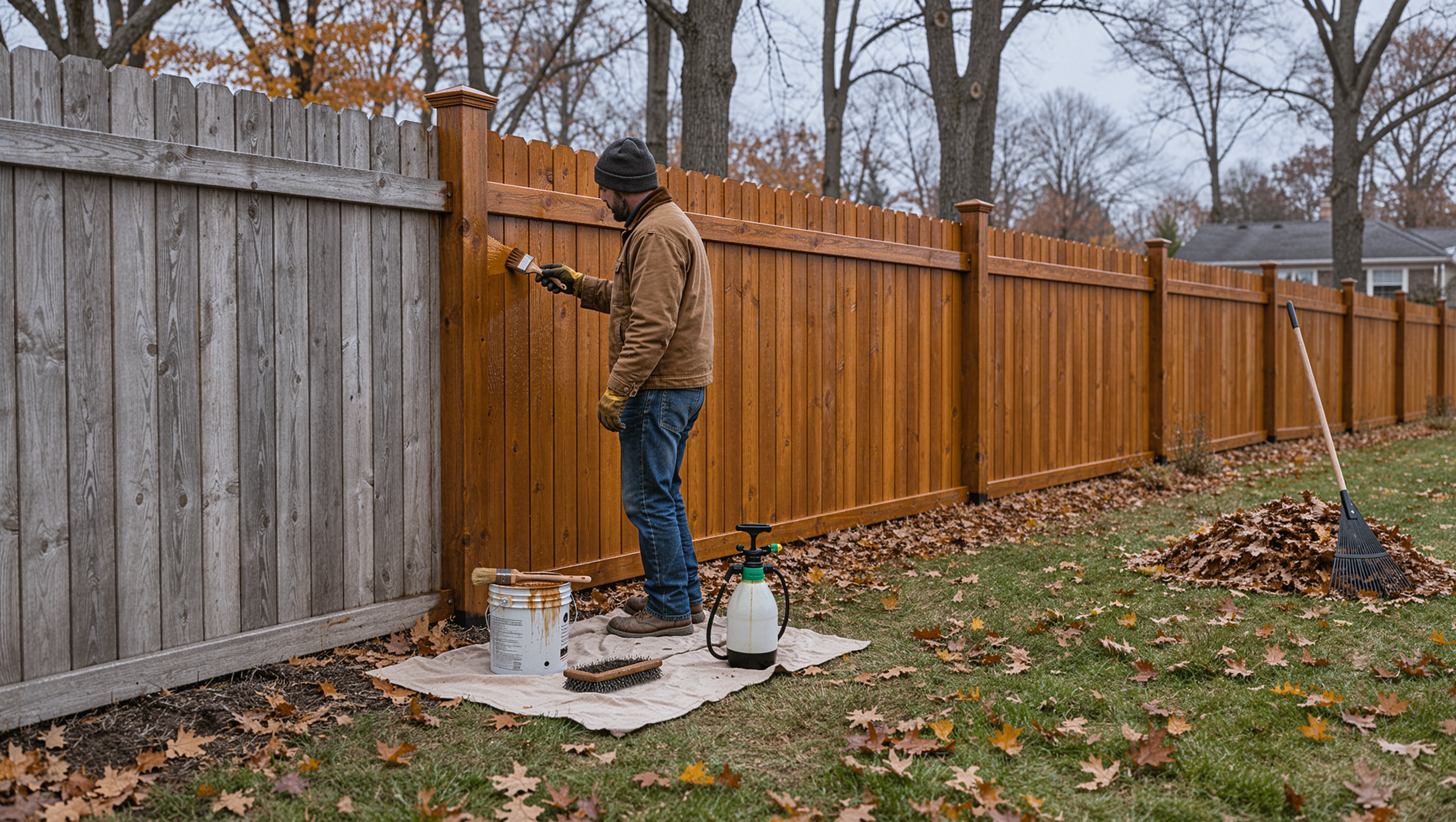
Before snow arrives in Oregon, IL, homeowners should focus on the parts of a wood fence that affect structure and winter usability. Check posts, rails, boards, gates, hardware, drainage, and lower sections for movement or moisture damage. Clearing leaves, trimming nearby vegetation, and fixing weak areas now can help reduce problems once snow and freeze-thaw weather begin.
Give the Fence a Full Walkaround
Start by walking the entire fence line from both sides if possible.
Look for anything that seems different from earlier in the year, including:
Leaning sections
Loose boards
Sagging rails
Moving posts
Gate problems
Areas staying damp
A slow inspection often reveals problems that are easy to miss when looking only from the house.
Look Down the Fence Line
Stand at one end and look along the full run.
This makes alignment problems easier to spot.
Watch for:
Posts leaning in different directions
Panels sitting unevenly
Rails beginning to sag
Sections pulling away from each other
Small changes can be worth checking before winter adds more moisture, wind, and snow.
Pay Close Attention to Post Bases
Posts are one of the most important parts of a wood fence.
Inspect the area where each post meets the ground.
Look for:
Soft wood
Crumbling areas
Deep cracks
Loose soil
Erosion
Visible movement
Damage near ground level can be more serious than surface weathering higher on the post.
Snow can hide these areas later, so fall is a good time to inspect them.
Test Posts That Look Questionable
If a post appears slightly tilted, apply light pressure and watch the base.
A stable post should not move noticeably.
Movement may point to:
Deteriorated wood
Weak soil
Erosion
Failing support
One loose post may be a localized repair.
Several moving posts can indicate a larger structural or drainage issue.
Clear Leaves Away From the Bottom
Late-fall leaves often collect along wood fencing.
Remove buildup around:
Posts
Bottom boards
Rails
Gates
Wet leaves can trap moisture and hide damage.
Clearing them also makes it easier to see whether water is collecting along the fence line.
Inspect Boards for Splitting or Movement
Check individual boards for signs of damage.
Look for:
Cracks
Splits
Warping
Loose fasteners
Boards pulling away from rails
A solid board that has simply loosened may be secured again.
A badly deteriorated board may need replacement.
Fixing loose boards before winter wind arrives can help prevent additional movement.
Check the Rails Behind the Boards
Rails are sometimes overlooked because they are less visible than the boards.
Inspect them for:
Sagging
Rot
Splitting
Loose connections
Separation from posts
If several boards move together, the rail may be the actual problem.
Repairing the support structure is usually more important than tightening every board individually.
Look for Fasteners That No Longer Hold
Inspect screws, nails, bolts, and brackets.
Watch for:
Loose hardware
Protruding fasteners
Rusted components
Missing fasteners
If hardware repeatedly pulls loose, check the surrounding wood.
The problem may be weakened material rather than the fastener itself.
Test Every Gate Before Snow
Open and close each gate several times.
Pay attention to:
Dragging
Sagging
Latch misalignment
Loose hinges
Uneven side gaps
A gate that is already difficult to operate in fall can become more troublesome after snow and ice reduce clearance.
Check the Gate Posts
The hinge and latch posts both affect gate alignment.
Inspect them for:
Leaning
Rot
Soil movement
Erosion
Loose hardware
If either post moves, the gate opening may change.
Repeated latch adjustments will not fully solve a shifting support post.
Keep the Swing Area Clear
Clear leaves, mulch, soil buildup, and yard debris from around the gate.
Then test the gate again.
Also think about where snow will be shoveled or piled.
A gate that works well now can become blocked if snow repeatedly collects in its path.
Watch for Moisture Along the Lower Fence
Wood near the ground stays wetter longer than upper sections.
Look for areas where:
Grass stays damp
Soil remains soft
Leaves collect
Water pools
Persistent moisture can contribute to deterioration over time.
These areas deserve closer inspection before snow covers them.
Check Drainage After Rain
One of the best times to evaluate fence conditions is after a fall rain.
Walk the property and look for:
Standing water
Downspout runoff
Soil washout
Mud around posts
Low spots
If water repeatedly collects near the same section, maintenance alone may not be enough.
Drainage may need to be part of the repair plan.
Trim Plants Touching the Fence
Vegetation can trap moisture and make inspection harder.
Trim back:
Vines
Shrubs
Tall grasses
Low branches
Leave enough space to see the wood and reach it for future maintenance.
Avoid allowing dense plants to stay pressed against the fence throughout winter.
Check for Overhanging Branches
Winter wind, snow, and ice can put extra weight on tree limbs.
Look for branches that could fall onto:
Panels
Rails
Posts
Gates
A strong fence can still be damaged by a heavy falling limb.
Weak fence sections are even more vulnerable.
Look for Dog Escape Points
If dogs use the yard, inspect the lower edge carefully.
Check near:
Gates
Corners
Slopes
Areas with erosion
Snow can hide gaps that are still large enough for a dog to investigate.
If erosion created the opening, address the ground issue rather than only filling the gap.
Review Wind-Exposed Sections
Solid wood privacy fencing catches more wind than open fence styles.
Pay extra attention to:
Long straight runs
Corners
End posts
Gate areas
If a section already moves noticeably in fall wind, it should be evaluated before stronger winter weather arrives.
Inspect the Surface Finish
If the fence is stained or sealed, check how the finish is holding up.
Look for:
Faded areas
Bare wood
Peeling sections
Uneven coverage
Structural repairs should come first.
If refinishing is needed, follow the requirements of the specific product and wait for suitable weather rather than rushing the work before snow.
Do Not Pile Heavy Snow Against Weak Areas
Once snow arrives, avoid pushing large piles directly against:
Leaning panels
Weak posts
Gates
Damaged rails
Snow can add pressure to already compromised sections.
Keep snowblowers and shovels far enough away to reduce the chance of direct impact.
Prioritize Structural Repairs
Not every issue needs immediate attention.
Before winter, focus first on problems involving:
Moving posts
Damaged rails
Loose boards
Gate failure
Significant rot
Drainage-related movement
Minor cosmetic weathering can often wait.
The goal is to keep the fence stable and functional.
When a Small Repair May Be Enough
A targeted repair can make sense when:
One or two boards are damaged
One rail needs attention
A single post has limited movement
Gate hardware needs adjustment
If the surrounding fence remains stable, a larger replacement may not be necessary.
When Replacement May Be More Practical
A broader repair or replacement may be worth considering when:
Several posts are failing
Rot appears in multiple sections
Long runs lean
Multiple rails are deteriorated
Gates repeatedly lose alignment
Repeated problems across the same fence can indicate that individual repairs are no longer solving the larger issue.
Pre-Snow Wood Fence Checklist
Before snow arrives in Oregon, IL, check:
Posts
Boards
Rails
Fasteners
Gates
Hinges
Latches
Lower wood sections
Drainage
Leaf buildup
Pet gaps
Vegetation
Tree branches
A fall inspection gives you a better chance to address problems while the fence remains visible and accessible.
Request a Free Wood Fence Estimate
Arrow Fence helps Oregon homeowners repair and maintain wood fencing before winter.
Whether your fence has loose boards, weak posts, damaged rails, gate problems, rot, or drainage-related movement, Arrow Fence can help you review practical repair or replacement options.
Contact Arrow Fence at arrowfencerockford.com to request a free estimate for your wood fence project.
