
Wood Fence Maintenance in Roscoe, IL: What to Do Before Snow Arrives
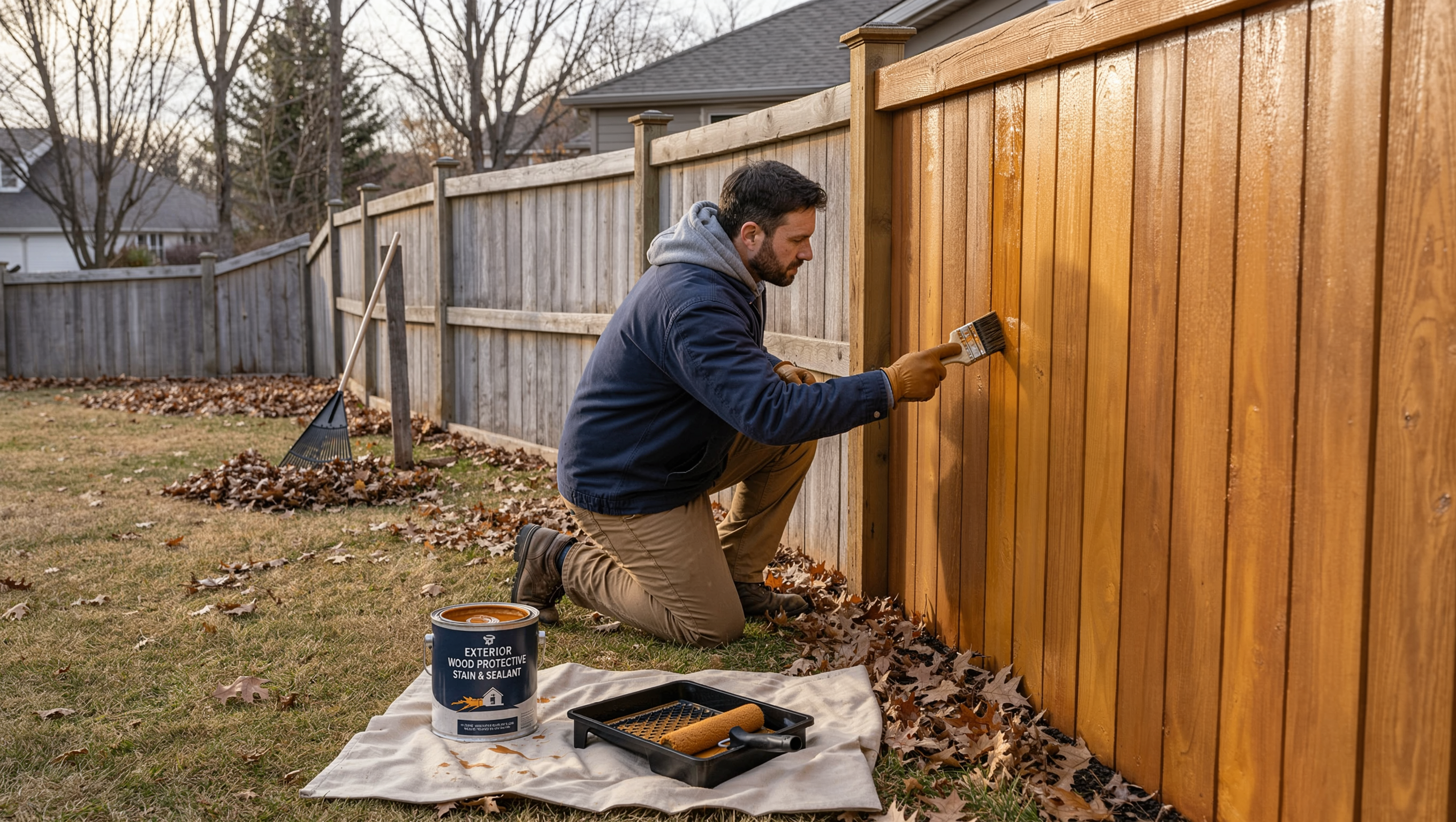
Before snow arrives in Roscoe, inspect your wood fence for loose boards, weak rails, leaning posts, gate problems, moisture buildup, and drainage issues. Clearing leaves, trimming vegetation, and fixing structural problems now can help the fence handle winter more reliably and make spring repairs less complicated.
Inspect the Fence While the Ground Is Still Visible
Late fall is a good time to walk the full fence line before snow covers important details.
Look for:
Leaning sections
Loose boards
Damaged rails
Gate misalignment
Rot near the ground
Erosion around posts
It is easier to spot small problems before snow and ice make the lower part of the fence harder to inspect.
Check Posts for Movement
Posts support the entire fence, so they should be one of the first things you inspect.
Look for signs such as:
Leaning
Wobbling
Soft soil
Exposed footing material
Rot near the base
If a post moves, nearby rails and boards may also begin to shift.
One weak post may be a targeted repair. Several unstable posts may point to a broader structural problem.
Pay Extra Attention to the Ground Line
Wood near the soil is more exposed to moisture.
Check for:
Soft wood
Crumbling areas
Deep cracks
Darkened deterioration
Fasteners pulling loose
Damage near ground level can be easy to miss from a distance.
If snow covers the area, you may not see it again clearly until warmer weather.
Clear Leaves Away From the Fence
Wet leaves can hold moisture against wood and hide damage.
Remove buildup around:
Posts
Bottom boards
Corners
Gates
This makes it easier to inspect the fence and reduces prolonged contact with damp debris.
It can also reveal erosion or soil gaps that need attention.
Look at the Rails Behind the Boards
Loose boards are not always the main problem.
Sometimes the supporting rail is cracked, sagging, or pulling away from the post.
Inspect rails for:
Rot
Splitting
Loose connections
Sagging
If several boards move together, the rail may need repair before the boards are secured.
Secure Loose Boards
Winter wind can place more stress on boards that are already loose.
Check for boards that are:
Pulling away from rails
Missing fasteners
Split
Warped
Cracked
If the board is still solid, securing it may be enough.
If the wood is badly deteriorated, replacing the board may be more practical.
Check Fasteners and Hardware
Loose hardware can become more noticeable during winter movement.
Look for:
Loose screws
Protruding nails
Missing fasteners
Rusted hardware
Weak connection points
If a fastener keeps loosening, inspect the wood around it.
The problem may be deterioration rather than the hardware itself.
Test Every Gate
Open and close each gate several times.
Watch for:
Sagging
Dragging
Latch problems
Loose hinges
Uneven side gaps
A gate that already rubs the ground in fall may become harder to use after snow or ice builds up.
Fixing alignment problems before winter can help keep access more reliable.
Inspect the Hinge Post
The hinge post carries much of the gate's weight.
Check it for:
Leaning
Rot
Soil movement
Loose hardware
Erosion
If the post moves, adjusting the latch alone may not solve the problem.
A stable gate starts with stable support.
Check the Latch Side Too
The opposite post can also affect gate alignment.
If it shifts, the gate may:
Miss the latch
Rub the post
Close unevenly
Develop larger gaps
Inspect both posts before deciding which part needs repair.
Keep the Gate Swing Area Clear
Remove leaves, soil, mulch, and yard debris from the gate path.
Then check whether the gate clears the ground throughout the full swing.
Also think about where snow will be piled later.
A repaired gate can still become difficult to use if snow is repeatedly stored in front of it.
Check Drainage After Rain
Water can affect both the wood and the soil supporting the fence.
After a fall rain, look for:
Standing water
Soft soil
Washout
Downspout runoff
Low spots
If water repeatedly collects near posts, it may contribute to movement or deterioration.
Drainage problems should be considered as part of the maintenance plan.
Trim Vegetation Touching the Fence
Shrubs, vines, and tall grasses can hold moisture against wood.
Trim vegetation enough to create space for inspection and airflow.
Pay attention to:
Dense shrubs
Climbing vines
Low branches
Overgrown side yards
Avoid leaving plants pressed tightly against the fence through winter.
Inspect Overhanging Branches
Snow and ice can add weight to tree limbs.
Look for branches that hang over the fence and could damage:
Panels
Rails
Gates
Posts
Weak branches should be addressed before winter storms increase the chance of impact.
Look for Pet Escape Gaps
If dogs use the yard, inspect the entire lower fence line.
Pay special attention near:
Gates
Slopes
Corners
Eroded areas
Snow can hide these gaps later.
If erosion caused the opening, address the ground condition rather than only filling the space.
Review Wind-Exposed Sections
Solid wood privacy fencing catches more wind than open fence styles.
Inspect:
Long straight runs
Corners
End posts
Gate areas
If a section already moves noticeably during fall wind, check the posts and rails before winter.
Check the Existing Finish
If the fence is stained or sealed, look for areas where the finish is:
Worn
Faded
Peeling
Uneven
Structural repairs should come first.
If refinishing is needed, follow the requirements of the specific product and wait for suitable weather rather than rushing the work right before winter.
Avoid Piling Snow Against Weak Sections
Once snow begins, try not to create heavy piles directly against:
Leaning panels
Weak posts
Damaged rails
Gates
Snow can add pressure to areas that are already compromised.
Snowblowers and shovels should also be kept far enough away to avoid striking the fence.
Know Which Repairs Should Happen Now
Before winter, prioritize problems that affect:
Stability
Gate operation
Pet containment
Loose or falling components
Rot
Minor cosmetic issues can often wait.
The most important goal is keeping the fence secure and functional.
When a Small Repair May Be Enough
A targeted repair may make sense when:
One or two boards are damaged
One rail is weak
A single post has limited movement
Gate hardware needs adjustment
If the surrounding fence remains stable, replacement may not be necessary.
When Replacement May Be More Practical
A larger repair or replacement may be worth considering when:
Several posts are failing
Rot is widespread
Long sections lean
Rails are failing in multiple areas
Gates repeatedly lose alignment
Repeated repairs can be a sign that the fence is reaching the end of its practical service life.
Pre-Snow Wood Fence Checklist
Before snow arrives in Roscoe, inspect:
Posts
Boards
Rails
Fasteners
Gates
Hinges
Latches
Lower wood sections
Drainage
Leaf buildup
Pet gaps
Vegetation
Tree branches
A thorough fall inspection can help you enter winter with fewer surprises.
Request a Free Wood Fence Estimate
Arrow Fence helps Roscoe homeowners repair and maintain wood fencing before winter.
Whether your fence has loose boards, weak posts, damaged rails, gate problems, rot, or drainage-related movement, Arrow Fence can help you review practical repair or replacement options.
Contact Arrow Fence at arrowfencerockford.com to request a free estimate for your wood fence project.
