
Wood Fence Repair in Freeport, IL: Loose Boards, Posts and Rails
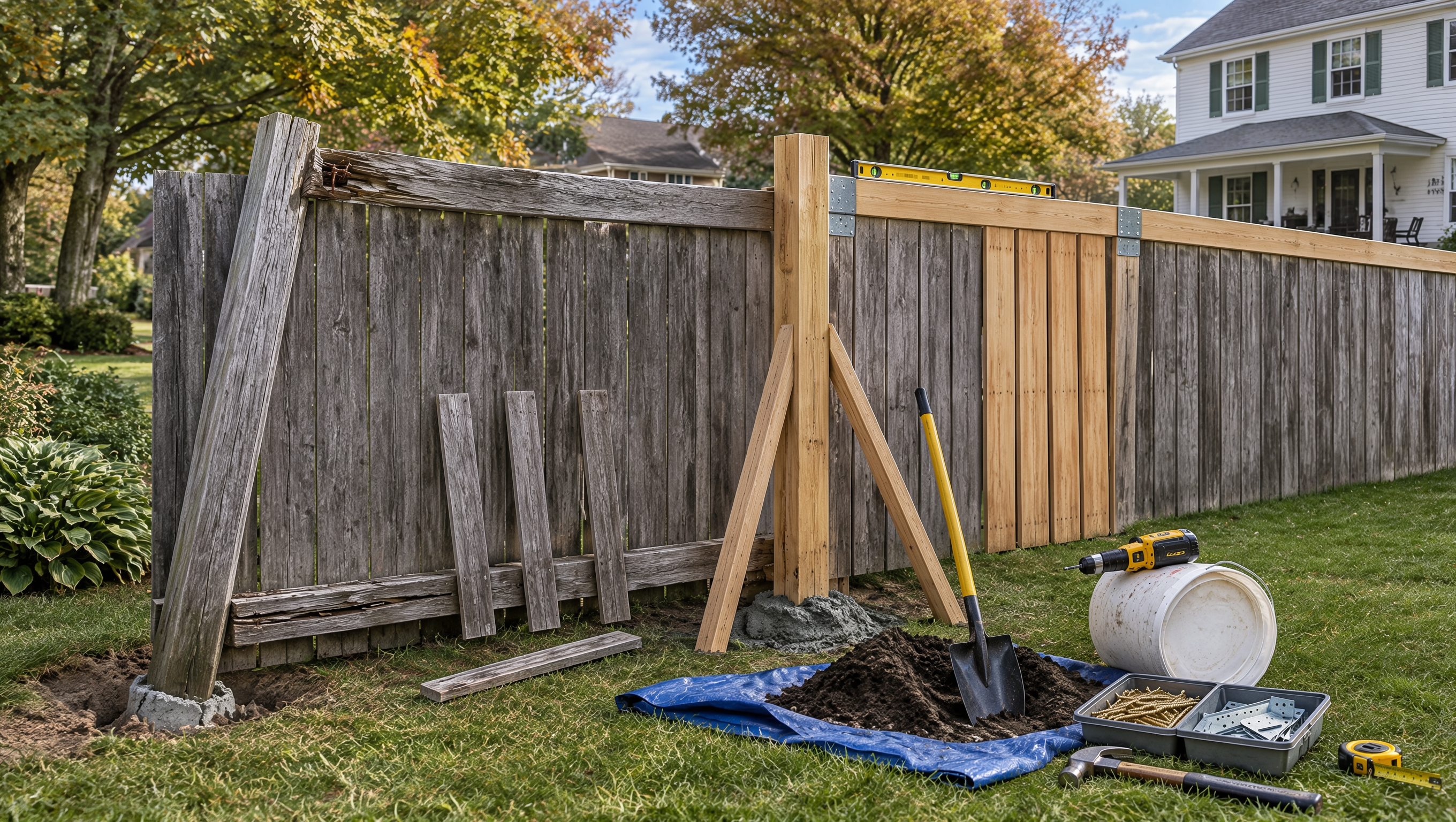
Loose boards, shifting posts, and damaged rails are some of the most common wood fence problems homeowners in Freeport may notice as a fence ages. Small repairs can often restore an isolated section, but repeated movement, widespread rot, or several failing posts may point to a larger structural issue that needs more than a quick fix.
Start With the Part That Supports the Fence
When a wood fence looks uneven, it is tempting to focus on the most visible problem.
A loose board may actually be caused by a damaged rail. A sagging section may trace back to a shifting post.
Before replacing individual pieces, check how the entire section is supported.
The main parts to inspect are:
Posts
Rails
Boards
Fasteners
Gates
Repairing the underlying problem first can help prevent the same damage from returning.
Loose Boards May Be an Early Warning Sign
One loose board is often a relatively small repair.
Look for boards that:
Pull away from the rails
Move when lightly pressed
Have loose nails or screws
Show deep cracks
Are badly warped
Have started to rot
If the board is still structurally sound, securing it again may be enough.
A board that is badly split or no longer holds fasteners may need replacement.
Check the Boards Around the Damaged Area
Do not stop after finding one loose board.
Inspect the boards beside it for similar movement.
Several loose boards in the same section can indicate:
A failing rail
Post movement
Widespread moisture damage
Loose connections
If several boards move together, the support behind them should be checked before replacing individual boards.
Rails Can Cause Larger Sections to Sag
Rails connect the fence posts and support multiple boards.
When a rail weakens, the problem can affect a much larger section than one damaged board.
Watch for:
Cracks
Sagging
Rot
Separation from the post
Loose fasteners
Several boards moving together
A rail that is structurally damaged may need repair or replacement before the fence boards can be secured properly.
Pay Attention to Rail Connections
Sometimes the rail itself remains solid, but the connection to the post has loosened.
Look closely where the rail meets each post.
Check for:
Pulling away
Loose screws
Damaged brackets
Split wood around the connection
Repairing the connection may restore stability without replacing the entire rail.
Fence Posts Deserve the Closest Inspection
Posts support everything else.
A fence can have good boards and rails but still lean if the posts are unstable.
Check each questionable post for:
Leaning
Movement at the base
Soft wood
Rot
Cracks
Exposed footing
Soil gaps
Apply only light pressure when testing movement.
A post that shifts noticeably should be evaluated before repairing the surrounding fence.
Rot Near the Ground Is Easy to Miss
Wood post deterioration often develops near the soil line.
The upper portion of the post may still look strong while the base has weakened.
Look for:
Soft areas
Crumbling wood
Dark discoloration
Deep cracks
Fasteners that no longer hold
If rot has significantly weakened the post, straightening it may not be enough.
Replacement may be the more reliable option.
Drainage Can Cause Repeat Post Problems
A fence post that keeps leaning may have a soil or water problem.
After rain, check for:
Standing water
Mud
Erosion
Downspout discharge
Washed-out soil
Water can gradually remove support around the footing.
If the drainage issue is not addressed, a repaired or reset post may begin moving again.
Fall Moisture Can Reveal Weak Areas
Freeport fall weather can make existing wood fence problems easier to notice.
Rain and damp soil may reveal:
Loose posts
Soft ground
Drainage problems
Moisture-damaged wood
Fall is also a useful time to inspect lower fence sections before snow begins covering the ground.
Check Fasteners Before Replacing Wood
Some fence problems are caused by loose or failed hardware rather than damaged lumber.
Inspect:
Screws
Nails
Brackets
Gate hinges
Latches
A solid board or rail may simply need to be secured again.
However, fasteners should still have sound wood to hold onto.
If the surrounding wood is rotten or badly split, replacing the component may be necessary.
Gate Problems May Connect to Fence Damage
A sagging wood gate can place additional stress on nearby posts.
Check whether the gate:
Drags
Needs to be lifted
Misses the latch
Rubs against a post
Has uneven gaps
Then inspect both gate posts.
A shifting hinge post can affect the gate and the adjacent fence section at the same time.
Wide Gates Put Extra Stress on Posts
Mower gates and wider equipment openings require stronger support.
If a large wood gate starts sagging, check:
Hinge posts
Gate framing
Bracing
Hardware
Repeatedly adjusting the latch will not correct a post that is moving under the gate's weight.
Look for Gaps Under the Fence
Post movement can change the height of attached fence sections.
That can create openings beneath the boards.
Check areas near:
Gates
Slopes
Corners
Low spots
This is particularly important for homeowners with dogs.
A small gap can become an escape point even when the upper fence remains in good condition.
Clear Leaves From the Fence Line
Wet leaves can hide deterioration and hold moisture against wood.
Clear buildup around:
Post bases
Lower boards
Gates
Corners
Removing debris makes it easier to see rot, erosion, and ground gaps.
It also keeps the lower fence line easier to inspect through fall.
Trim Vegetation Touching the Fence
Shrubs and vines that stay against wood can keep areas damp and make damage harder to see.
Trim vegetation that:
Covers boards
Hides post bases
Pushes against rails
Interferes with gates
Leave enough space to inspect and maintain the fence.
Watch Wind-Exposed Sections
Solid wood privacy fencing catches wind.
After strong weather, inspect long runs for:
Post movement
Loose boards
Rail separation
Weak corners
A section that moves more than the rest may have a structural problem that should be addressed before additional storms.
When a Small Repair May Be Enough
Targeted repair often makes sense when:
One or two boards are loose
A single rail has failed
One post has shifted
Hardware needs replacement
The rest of the section remains solid
Localized repairs can extend the useful life of a wood fence when the surrounding structure is still sound.
When Larger Repair or Replacement Makes More Sense
More extensive work may be appropriate when:
Several posts are rotten
Multiple rails are failing
Long sections lean
Many boards repeatedly loosen
Gate problems keep returning
Rot is widespread
At that point, repairing one piece at a time may no longer address the overall condition of the fence.
Wood Fence Repair Checklist
Freeport homeowners should inspect:
Loose boards
Split or rotten boards
Rail condition
Rail-to-post connections
Post movement
Rot near ground level
Drainage
Gate alignment
Ground gaps
Fasteners
Looking at the fence as a complete system makes it easier to identify the real source of the problem.
Request a Free Wood Fence Repair Estimate
Arrow Fence helps Freeport homeowners repair loose boards, damaged rails, leaning posts, gate problems, and other wood fence issues.
Whether the damage is limited to one section or involves a larger portion of the fence, Arrow Fence can help you review practical repair and replacement options for your property.
Contact Arrow Fence at arrowfencerockford.com to request a free estimate for your wood fence repair project.
