
Wood vs Vinyl Fence in Beloit, WI: Which Is Better for Your Yard?
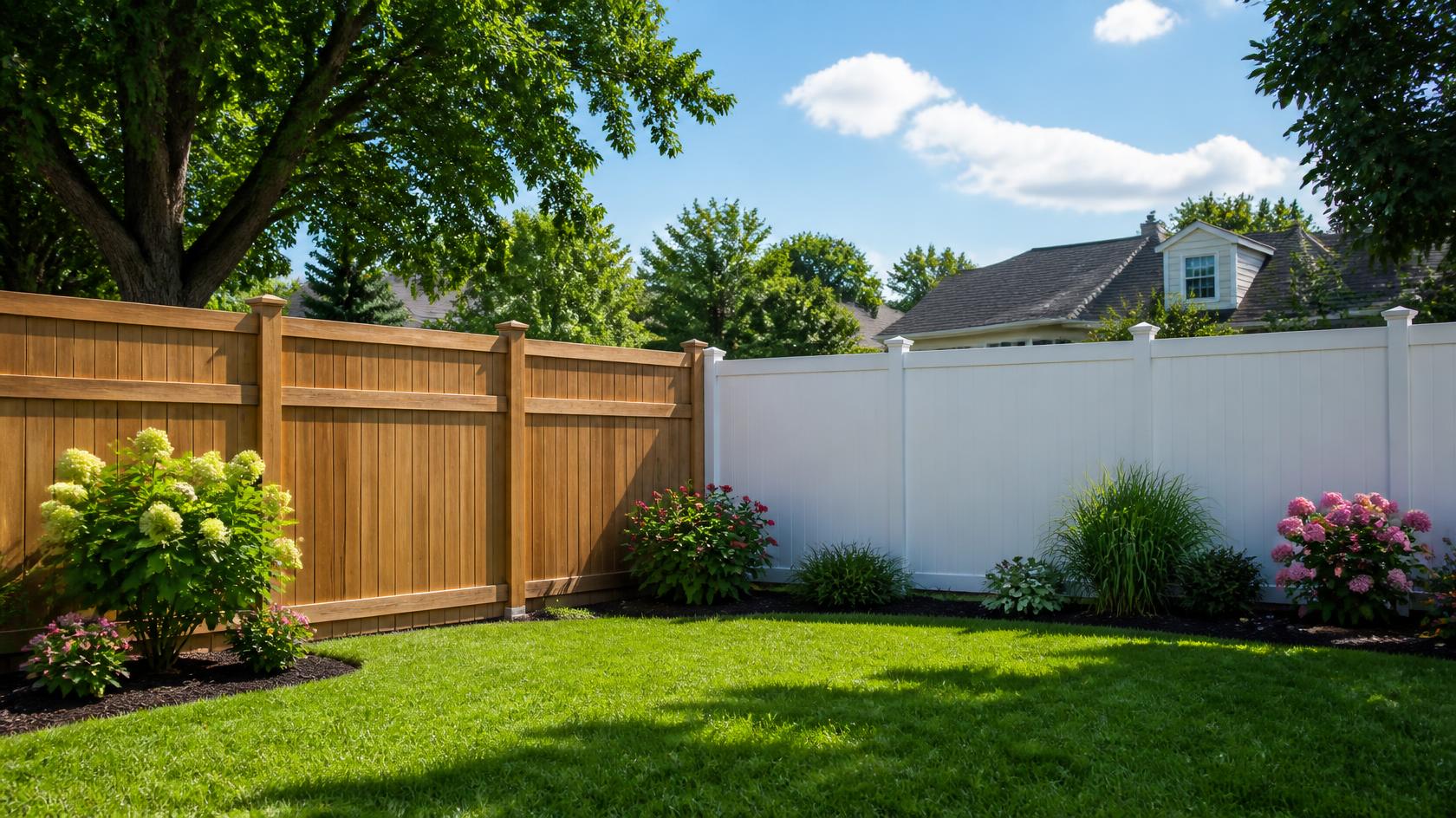
Wood and vinyl are both strong fence choices for Beloit homeowners, but they serve different priorities. Wood offers natural character and more design flexibility, while vinyl is easier to maintain and provides consistent privacy without routine staining or painting.
Start With What Matters Most for Your Yard
Choosing between wood and vinyl usually comes down to a few practical questions.
Do you want a natural appearance? Is low maintenance the top priority? Do you need privacy for pets or outdoor living? How much time are you willing to spend on upkeep over the years?
Before choosing a material, consider:
Privacy needs
Yard size
Pets and children
Desired appearance
Maintenance preferences
Gate access
Landscaping
Drainage
Wind exposure
Long-term upkeep
Both wood and vinyl can create an attractive, functional fence, but each has different strengths.
Wood Fencing Offers Natural Character
Wood remains a popular choice because of its warm, traditional appearance.
It works well with:
Mature landscaping
Gardens
Decks
Patios
Traditional homes
Larger residential yards
Wood can also be customized in ways that make it easy to coordinate with the rest of the property.
Homeowners may choose different:
Stain colors
Board arrangements
Heights
Decorative tops
Post caps
For homeowners who want the fence to feel like a natural part of the landscape, wood can be especially appealing.
Vinyl Creates a Clean, Consistent Look
Vinyl offers a more uniform appearance.
The panels, rails, and posts create clean lines that can work well with both traditional and newer homes.
Vinyl options may include:
Full-privacy panels
Semi-private panels
Picket fencing
Lattice-top designs
Decorative tops
Colors may include white, tan, gray, or other neutral finishes depending on the product.
Vinyl is a good option for homeowners who want the fence to look consistent without needing to re-stain or repaint it.
Which Material Provides Better Privacy?
Both wood and vinyl can provide strong backyard privacy.
Wood Privacy Fencing
Solid vertical boards or board-on-board designs can block neighboring views and create comfortable spaces around patios, decks, and backyards.
Board-on-board fencing can be especially useful because the overlapping boards help reduce visible gaps as wood expands and contracts.
Vinyl Privacy Fencing
Solid vinyl panels provide continuous screening without natural spacing between individual boards.
This makes vinyl especially useful for homeowners who want a clean, consistent privacy barrier.
For maximum screening, both materials can work very well.
Which Material Is Better for Dogs?
Both materials can also work for pet containment.
Wood for Dogs
Solid wood can block views of:
Neighboring pets
Pedestrians
Vehicles
Wildlife
Sidewalk activity
This may help dogs that react strongly to outside activity.
Vinyl for Dogs
Solid vinyl also provides excellent visual screening.
Its smooth surface offers few obvious footholds for dogs that attempt to climb.
With either material, homeowners should consider:
Fence height
Ground gaps
Gate security
Digging behavior
Stable posts
Drainage
The best choice depends more on the dog’s behavior than on the material alone.
Maintenance Is One of the Biggest Differences
Maintenance is where wood and vinyl differ most.
Wood Fence Maintenance
Wood generally requires periodic attention to help protect it from moisture and weather.
Homeowners may need to:
Stain or seal the fence
Inspect for rot
Replace damaged boards
Check for splinters
Tighten hardware
Watch for cracking or warping
Vinyl Fence Maintenance
Vinyl does not require routine painting, staining, or sealing.
Maintenance usually includes:
Occasional washing
Checking posts
Inspecting rails
Testing gates and latches
Looking for impact damage
If minimizing routine maintenance is a major priority, vinyl often has the advantage.
Wood Is Easier to Repair in Small Sections
One benefit of wood is that individual boards can often be replaced without changing an entire section.
Common wood repairs may include:
Replacing one damaged board
Fixing a rail
Adjusting a gate
Replacing hardware
Stabilizing a post
Vinyl can also be repaired, but damaged panels or rails may require matching replacement components.
For homeowners who prefer simple board-by-board repairs, wood may be appealing.
Vinyl Handles Moisture Differently
Wood can absorb moisture, which means drainage and protective finishes are important.
Wet soil, leaves, mulch, or vegetation should not remain piled against the bottom of a wood fence.
Vinyl does not absorb water in the same way and does not rot.
However, the posts, footings, and surrounding soil can still be affected by erosion and seasonal ground movement.
Good drainage matters for both fence types.
Which Fence Is Better Around a Patio?
Both materials can create an attractive patio enclosure.
Wood can provide a warmer, more natural look that works well with decks, pergolas, and garden landscaping.
Vinyl can create a cleaner, more uniform backdrop for:
Outdoor kitchens
Hot tubs
Fire pits
Seating areas
Modern patios
Homeowners who want targeted privacy may use either material only around the patio instead of installing solid fencing around the entire yard.
Consider Wind Exposure
Solid privacy fences catch more wind than open fence styles.
This applies to both wood and vinyl.
Properties with open exposure should pay particular attention to:
Post stability
Rail strength
Footings
Gate reinforcement
Semi-private styles may allow more airflow and reduce the enclosed feeling of the yard.
A shadowbox wood fence or semi-private vinyl design may be worth considering where full screening is not necessary.
Which Material Works Better on Sloped Yards?
Both wood and vinyl can be installed on properties with elevation changes, but the layout needs to be planned carefully.
Depending on the design, fencing may be:
Stepped in level sections
Installed to follow the grade more closely
Ground gaps are especially important for pet owners.
A fence that looks attractive from a distance may still leave openings at low points if the slope is not considered carefully.
Think About Gates Early
Gate planning should happen before installation regardless of the fence material.
A walk gate may be enough for everyday access, while wider gates may be needed for:
Riding mowers
Trailers
Landscaping equipment
Utility vehicles
Construction materials
Wood gates can become heavy and need proper bracing.
Vinyl gates may require internal reinforcement.
Both materials benefit from strong posts, reliable hinges, and secure latches.
Compare the Look With Your Home
The best fence should complement the property.
Wood may be the stronger choice if you prefer:
Natural grain
Warm stain colors
Traditional backyard character
Greater customization
Vinyl may be the stronger choice if you prefer:
Clean lines
Consistent color
Minimal refinishing
A more uniform appearance
Compare both materials with the home's siding, trim, roofing, deck, patio, and landscaping before deciding.
Prepare Either Fence for Beloit Weather
Fencing in Beloit needs to handle Wisconsin wind, rain, snow, ice, storms, and repeated freeze-thaw cycles.
Wood and vinyl react differently to these conditions, but both require seasonal inspections.
Homeowners should:
Check posts after storms
Test gates and latches
Watch for erosion
Remove debris from fence bases
Trim nearby branches
Inspect for impact damage
Clear heavy snow carefully
Wood may require renewed protective finishes over time.
Vinyl can become less flexible during severe cold, so frozen panels should be protected from hard impacts.
Wood vs Vinyl: Quick Comparison
Choose Wood If You Want:
Natural appearance
More stain and style options
Easier individual-board repairs
Traditional character
Strong privacy
Choose Vinyl If You Want:
Lower routine maintenance
No staining or painting
Consistent privacy panels
Smooth surfaces
Clean, uniform appearance
Neither material is automatically better for every Beloit property.
The right choice depends on the yard, household, pets, appearance preferences, and how much maintenance you want to handle.
Request a Free Fence Estimate
Arrow Fence helps Beloit homeowners compare wood and vinyl fencing for privacy, pets, curb appeal, and comfortable outdoor spaces.
Whether you are considering a new wood fence, vinyl privacy panels, fence repair, replacement, or new gates, Arrow Fence can help you choose a practical option for your property.
Contact Arrow Fence at arrowfencerockford.com to request a free estimate for your fence project.
