
Wood vs Vinyl Fence in Beloit, WI: Pros, Cons and Maintenance
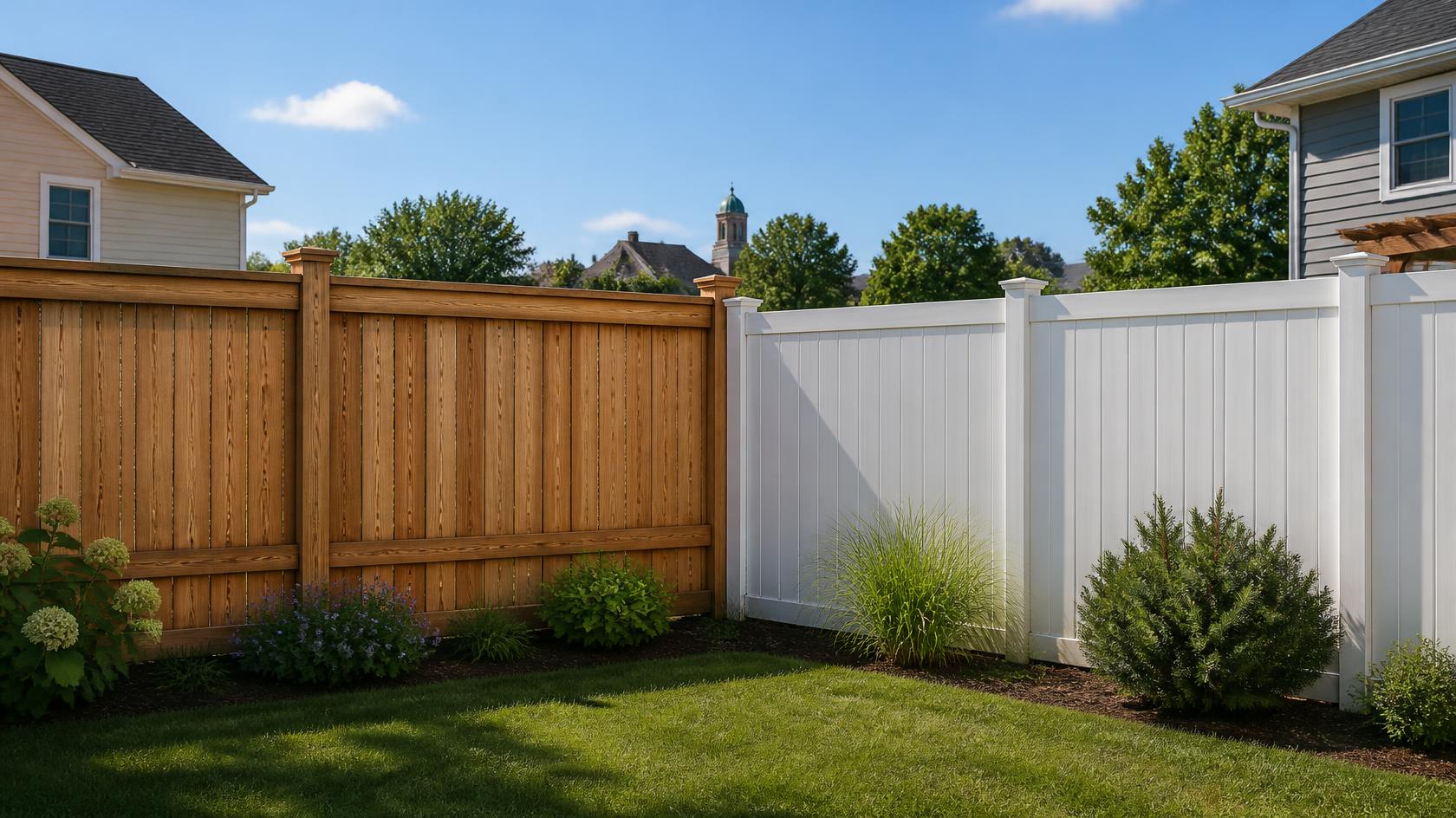
Wood and vinyl can both provide strong privacy and attractive backyard boundaries for Beloit homeowners, but they require different levels of upkeep. Wood offers a natural, customizable appearance and easier individual-board repairs, while vinyl provides consistent screening with less routine maintenance. The right choice depends on style, privacy, pets, weather exposure, and how much maintenance you want to handle.
Wood vs Vinyl: What Is the Main Difference?
Both materials can work well for residential fencing, but they create a different ownership experience.
Wood emphasizes:
Natural appearance
Design flexibility
Stain and finish options
Traditional backyard style
Individual board replacement
Vinyl emphasizes:
Lower routine maintenance
Consistent appearance
No regular staining or painting
Smooth surfaces
Solid privacy panels
Neither material is automatically right for every property. The better fit depends on how the fence will be used.
Wood Fence Pros
Natural Backyard Appeal
Wood provides a warm, traditional appearance that works naturally with trees, gardens, decks, patios, and landscaping.
Homeowners can choose from several designs, including:
Solid vertical boards
Board-on-board fencing
Shadowbox
Horizontal layouts
Decorative-top designs
Different stains can also change the finished look significantly.
Strong Privacy Options
Solid wood fencing can create excellent backyard screening.
Board-on-board designs use overlapping boards to help reduce visible gaps as the wood expands and contracts.
Wood can be useful around:
Patios
Neighboring property lines
Side yards
Pet areas
Road-facing sections
Easy to Customize
Wood can be adjusted in ways that may be harder with prefabricated fence systems.
Homeowners can customize:
Board arrangement
Fence height
Gate design
Decorative trim
Post caps
Stain color
This flexibility can help the fence complement the home's exterior and landscaping.
Individual Sections Can Often Be Repaired
If a few boards become damaged, those components may be replaceable without rebuilding an entire fence section.
Rails, hardware, and some posts can also be repaired individually depending on the condition of the fence.
Wood Fence Cons
More Routine Maintenance
Wood usually requires more maintenance than vinyl.
Homeowners should periodically check for:
Rot
Loose boards
Splinters
Cracks
Fading
Worn finish
Unstable posts
Gate alignment problems
Protective staining or sealing may also be needed depending on the wood and exposure.
Moisture Matters
Rain, snow, damp soil, and trapped debris can affect wood over time.
Wet leaves, soil, or mulch should not remain piled against the fence.
Vegetation should also be kept far enough away to allow airflow and access for inspections.
Appearance Changes Over Time
Wood naturally weathers.
Without maintenance, its color can fade and boards may develop visible wear.
Some homeowners appreciate the aged appearance, while others prefer a more consistent finish.
Vinyl Fence Pros
Lower Routine Maintenance
Vinyl does not require regular staining, sealing, sanding, or painting.
Typical maintenance involves:
Occasional washing
Checking posts
Inspecting rails
Testing gates
Checking hardware
For homeowners who prefer less seasonal fence maintenance, this can be a major advantage.
Consistent Privacy
Full-privacy vinyl panels create continuous screening without spaces between individual boards.
This can work well around:
Backyards
Patios
Side yards
Outdoor living areas
Pet enclosures
The uniform panels also provide a clean background for landscaping.
Smooth Surface
Vinyl has a smooth surface without the splinters that can develop on older wood.
This can appeal to households with children or pets that spend time close to the fence.
Clean, Uniform Appearance
Vinyl maintains a more consistent appearance than natural wood.
Depending on the product, homeowners may have choices beyond traditional white, including neutral colors and decorative panel styles.
Vinyl Fence Cons
Individual Damage May Require Different Repairs
Wood boards can often be replaced one at a time.
With vinyl, damage to a panel or rail may require replacement of a larger manufactured component.
The availability of matching replacement pieces can also matter as the fence ages.
Solid Panels Catch Wind
Full-privacy vinyl creates a large surface for wind to push against.
Stable posts and proper installation are especially important on exposed properties.
The same consideration applies to solid wood privacy fencing, but large vinyl panels make post stability particularly important.
Cold-Weather Impacts Need Attention
Vinyl can become less flexible during very cold conditions.
Homeowners should avoid hard impacts to frozen panels from:
Snow-removal equipment
Vehicles
Tools
Heavy objects
Careful winter maintenance can help reduce unnecessary damage.
Which Material Offers Better Privacy?
Both wood and vinyl can provide excellent screening.
Choose Wood If You Prefer:
Natural character
Custom board patterns
Stain options
Traditional backyard appearance
Board-on-board wood can provide especially strong visual coverage.
Choose Vinyl If You Prefer:
Consistent solid panels
Clean lines
Less routine refinishing
Uniform appearance
For homeowners focused mainly on complete visual screening, either can work well when properly installed.
Which Is Better for Pets?
Both materials can work well for dogs.
Solid fencing is especially useful for dogs that react to:
Neighboring pets
Wildlife
Pedestrians
Vehicles
Nearby activity
By blocking these views, wood or vinyl may help reduce visual distractions.
Pet security depends on more than the fence material, however.
Homeowners should also consider:
Fence height
Dog size
Jumping ability
Digging behavior
Ground clearance
Gate security
Latch placement
A poorly planned gate or large ground gap can create problems regardless of the material.
Wood vs Vinyl for Gates
Gates receive more movement and stress than most fence sections.
Wood Gates
Wood gates can be customized easily, but larger gates can become heavy.
Good bracing, strong hinges, and stable posts are important.
Vinyl Gates
Vinyl gates offer a clean appearance and may require internal reinforcement, particularly for wider openings.
For either material, gate width should be planned around everyday needs.
Consider access for:
Riding mowers
Trailers
Landscaping equipment
Patio furniture
Utility vehicles
Planning the gate before installation is much easier than changing it afterward.
How Wood Handles Beloit Weather
Wood fencing in Beloit is exposed to changing Wisconsin conditions throughout the year.
Rain, snow, ice, wind, and freeze-thaw cycles can affect boards, posts, finishes, and gates.
Homeowners should:
Inspect the fence after storms
Maintain protective finishes
Remove wet debris
Watch for rot
Check for loose boards
Monitor soil movement
Spring inspections are particularly useful after winter moisture and ground movement.
How Vinyl Handles Beloit Weather
Vinyl is not affected by rot in the same way as wood, but seasonal conditions still matter.
Homeowners should:
Inspect posts after severe weather
Check panel connections
Test gates
Watch for cracked components
Clear heavy snow carefully
Monitor erosion near posts
Winter impacts deserve particular attention when the material is cold.
Drainage Matters for Both Materials
Choosing a moisture-resistant material does not eliminate drainage concerns.
Water movement can affect:
Posts
Footings
Gate alignment
Soil levels
Ground clearance
Heavy rain and snowmelt may wash soil away and create openings under either wood or vinyl fencing.
Before installation, look for low areas and natural drainage paths.
The fence should not unnecessarily interfere with water movement across the property.
Which Works Better on Sloped Yards?
Both wood and vinyl can be installed on properties with elevation changes.
Depending on the system and desired appearance, fencing may be:
Stepped
Installed to follow the grade more closely
Wood often provides significant flexibility when adapting individual boards to changing terrain.
Vinyl systems may have specific installation methods based on the panel design.
Pet owners should pay extra attention to gaps at the bottom of sloped sections.
How Landscaping Affects Maintenance
Landscaping should leave enough room to maintain the fence.
Keep space for:
Mowing
Cleaning
Trimming
Repairs
Inspections
Wood benefits from good airflow around the boards.
Vinyl is easier to wash when shrubs and plants do not grow directly against the panels.
For both materials, tree branches should be trimmed before they rub against or fall onto the fence.
Wood vs Vinyl Maintenance at a Glance
Wood Fence Maintenance
Expect to:
Inspect boards and rails
Check for rot and cracks
Replace damaged boards
Maintain stain or protective finish
Remove wet debris
Check posts and gates
Vinyl Fence Maintenance
Expect to:
Wash panels periodically
Inspect rails and posts
Test gates and latches
Check for cracks
Watch for soil erosion
Remove debris near the fence
Vinyl generally requires less surface maintenance, while wood provides more freedom to refinish or change its appearance.
Consider the Look Five or Ten Years From Now
Think beyond how the fence will look on installation day.
With wood, ask whether you are comfortable maintaining its finish and natural material.
With vinyl, consider whether you prefer a more consistent appearance and manufactured panel design over time.
The better choice is often the material whose long-term maintenance fits the homeowner's expectations.
Can Wood and Vinyl Be Used Together?
Yes.
A property does not always need one material everywhere.
For example, homeowners might use:
Vinyl privacy fencing near the patio
Wood as an accent around an outdoor living area
Another open fence style along distant boundaries
A mixed layout can help balance privacy, appearance, and maintenance.
When Should an Existing Fence Be Replaced?
A few damaged components may be repairable.
Replacement may be worth considering when:
Several posts are failing
Large sections are deteriorated
Gates repeatedly lose alignment
Privacy is no longer adequate
The layout no longer fits the yard
Repairs are becoming frequent
Before replacing a fence, homeowners can also reconsider gate locations, privacy needs, and material preferences.
Choosing Between Wood and Vinyl in Beloit
Wood may be the better fit for homeowners who value natural appearance, customization, and the ability to refinish the fence.
Vinyl may be more appealing to homeowners who prioritize lower routine maintenance and consistent privacy.
The final decision should also consider pets, drainage, yard layout, wind exposure, gates, and the amount of maintenance the homeowner wants to manage.
Request a Free Fence Estimate
Arrow Fence helps Beloit homeowners compare wood and vinyl fencing for privacy, pets, outdoor living, and residential property boundaries.
Whether you are considering a new wood fence, vinyl privacy panels, fence replacement, repairs, or new gates, Arrow Fence can help you review practical options for your yard.
Contact Arrow Fence at arrowfencerockford.com to request a free estimate for your fence project.
