
Wood vs Vinyl Fence in Oregon, IL: Which Is Better for Your Yard?
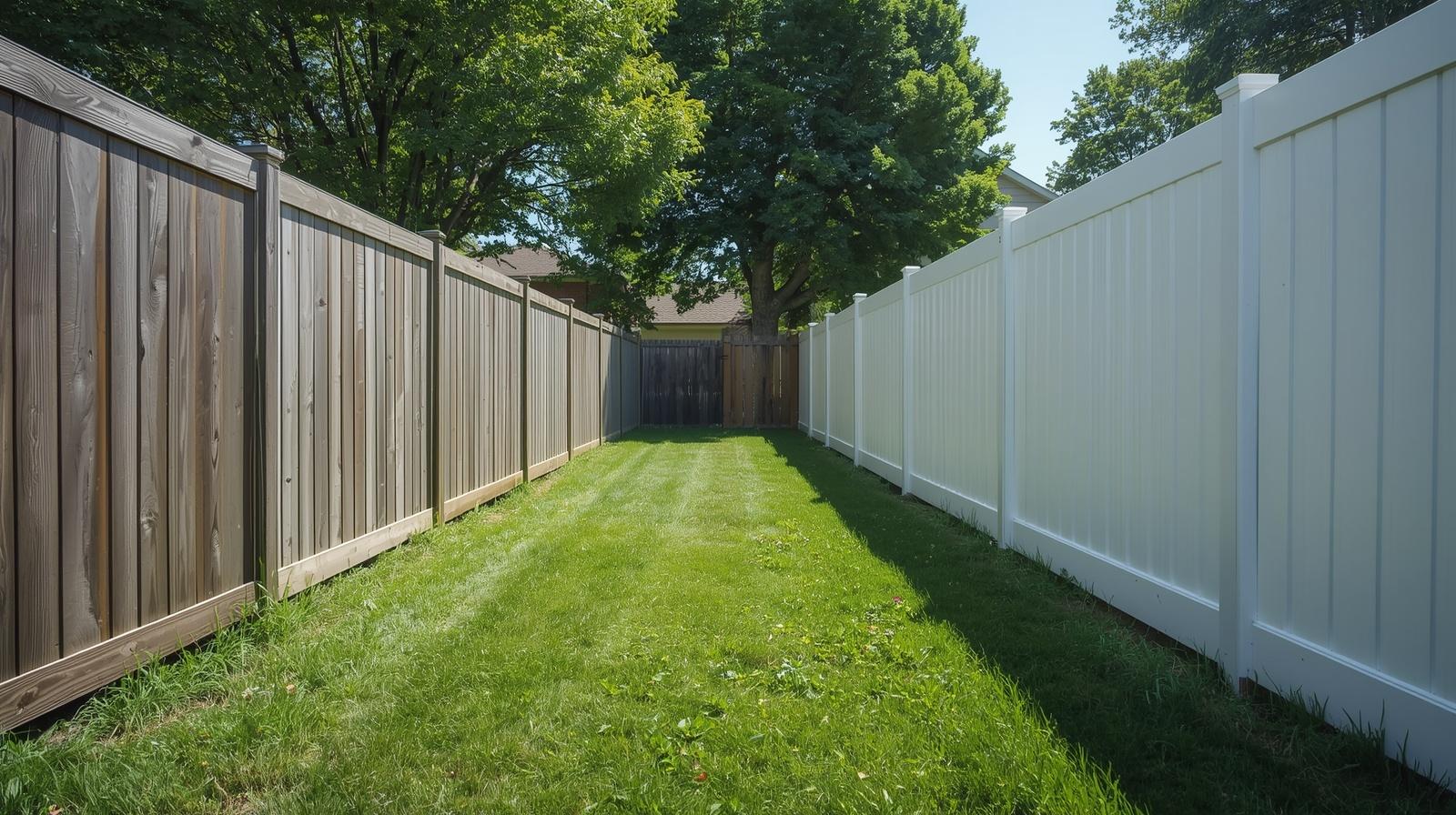
Wood and vinyl are the two most popular residential fence materials — and both are solid choices depending on your priorities. This guide breaks down the real differences so Oregon, IL homeowners can decide which one makes more sense for their yard, their budget, and their lifestyle.
A Comparison Worth Having Honestly
Wood and vinyl privacy fencing look similar from a distance. Both create solid enclosure, both come in a range of heights and styles, and both hold up in the right conditions. But they're genuinely different materials with different strengths, different costs, and different demands on the homeowner over time.
Oregon sits in Ogle County along the Rock River — a part of northern Illinois that gets real winters. Freeze-thaw cycles, heavy snow, spring rain, and humid summers all factor into how a fence performs over the long haul. The right choice for your yard depends on more than aesthetics. Here's how to think through it.
Upfront Cost
Wood wins this round. A wood privacy fence — cedar or pressure-treated pine — typically costs less per linear foot than vinyl at the point of installation. For homeowners working with a tight budget or fencing a large area, that upfront difference is real and worth acknowledging.
Vinyl costs more to install. The material itself is pricier, and the installation process is similar in complexity. If budget is the primary constraint, wood is the more accessible starting point.
Long-Term Cost of Ownership
This is where the picture shifts. Wood's lower upfront cost comes with an ongoing maintenance bill that adds up over the life of the fence.
A wood fence in Illinois needs to be sealed, stained, or painted every two to three years to hold up against moisture, UV exposure, and the freeze-thaw cycling that breaks down unprotected wood faster than most homeowners expect. Individual boards that split, warp, or rot need to be replaced. Hardware rusts and needs attention. Over 15 to 20 years, those costs accumulate.
Vinyl requires almost none of that. An occasional rinse with a garden hose handles most cleaning. There are no boards to replace, no staining cycles, no rust on exposed hardware. Over a 25 to 30-year lifespan, the total cost of owning a vinyl fence is frequently lower than wood — even though it costs more on day one.
If you're planning to stay in your home long term, vinyl's math tends to get better the longer you own it.
Maintenance Commitment
This is one of the most important practical differences between the two materials — and it's worth being honest with yourself about before you choose.
Wood fencing rewards consistent attention. When it's sealed on schedule, inspected annually, and repaired promptly, it stays strong and looks good for decades. When maintenance slips — a few years without resealing, a rotted board left too long — the decline accelerates and catches up quickly.
Vinyl asks very little. It doesn't absorb moisture, so it doesn't rot. The color doesn't fade or peel because it's not a surface treatment — it runs through the material. There's no annual checklist. The fence you install is largely the fence you keep, season after season, with minimal involvement.
For busy households, families with young kids, or homeowners who simply don't want another maintenance task on the list, this difference alone often settles the decision.
Appearance and Style
Both materials look sharp when installed well. The visual difference comes down to texture, warmth, and what suits your property.
Wood has a natural character that manufactured materials don't fully replicate. The grain, the warmth of a cedar stain, the way it weathers into a soft gray if left natural — these qualities appeal to homeowners who want their fence to feel like a genuine part of the landscape. A well-maintained wood fence is genuinely beautiful, and it complements traditional home styles and natural landscaping in ways vinyl doesn't quite match.
Vinyl looks clean and consistent. It holds that look over time without fading or weathering, which is a meaningful advantage. Style options have expanded considerably — vinyl privacy fencing is available in white, tan, gray, and darker earth tones, and in wood-grain textures that close some of the aesthetic gap. It works well with a wide range of home styles and looks particularly sharp with newer construction.
Neither material is objectively better looking — it depends on the property, the home's architectural style, and personal preference.
Performance in Illinois Weather
Both wood and vinyl can handle northern Illinois winters when they're installed correctly. The key factor for either material is proper post installation — posts set below the frost line, a minimum of 42 to 48 inches deep in concrete footings, so freeze-thaw cycles don't heave them out of position over time.
Beyond that, the materials behave differently through the seasons.
Wood absorbs moisture. That's the core challenge. Wet springs, snow melt, and humid summers all work on unprotected wood over time, causing swelling, cracking, and eventually rot — particularly at the post base where moisture concentrates. Proper sealing creates a protective barrier, but it's not permanent and needs to be renewed.
Vinyl doesn't absorb moisture. It won't swell, warp, or rot regardless of what the weather does. In a climate like Oregon, IL's — where the fence is exposed to moisture for a significant portion of the year — this is a genuine structural advantage. Extreme cold can make vinyl slightly more brittle, but quality vinyl fencing manufactured for residential use is engineered to handle the temperature range northern Illinois produces.
Lifespan
A well-maintained wood fence in Illinois lasts 15 to 20 years. That's a solid lifespan for a fence that receives proper care — annual inspections, regular sealing, and prompt board replacement when needed. Without that maintenance, 10 to 12 years is more realistic.
A vinyl fence lasts 25 to 30 years or more with minimal upkeep. For most homeowners, that means one fence installation rather than two over the same period.
Pet and Family Considerations
For households with dogs or young children, vinyl has a practical edge. It doesn't splinter, so there are no rough edges or sharp points as it ages. Panels stay solid without the individual board loosening that happens in wood fences over time. A board that pulls away from a rail creates a gap — and gaps in a fence containing a dog are a problem.
Wood can absolutely work for pet and family fencing. It just requires more attention over time to make sure the enclosure stays tight and secure as the material weathers.
Which One Is Right for Your Yard?
There's no universal answer — it genuinely depends on your situation. A few questions that help clarify the decision:
Choose wood if: You prefer a natural, warm aesthetic. You're comfortable with periodic maintenance and actually enjoy caring for your property. Your upfront budget is a real constraint. You want a fence that blends naturally into a wooded or naturalistic yard setting.
Choose vinyl if: You want a fence that takes care of itself. You have kids or pets and want a consistently safe, smooth enclosure. You're planning to stay in your home long term and want to minimize total cost of ownership. You've owned a wood fence before and are ready for something easier.
Either way, the most important factor is quality installation — specifically, posts set at proper depth with concrete footings. A well-installed wood fence outlasts a poorly installed vinyl one every time.
Arrow Fence Installs Both — and Will Help You Choose
Arrow Fence works with homeowners throughout Oregon, Rockford, Byron, Roscoe, Rockton, Machesney Park, Loves Park, South Beloit, Beloit, Janesville, and across northern Illinois and southern Wisconsin. We install wood and vinyl privacy fencing, chain link, aluminum, ornamental, and custom gates — and we'll give you a straight answer about which option makes the most sense for your specific yard and budget.
Visit arrowfencerockford.com or give us a call to schedule your free, no-obligation estimate.
